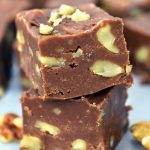
Easy Fudge Recipe
My all-time favorite Easy FUDGE! It's easy to make, no thermometer required and has a great old-fashioned, amazing fudge flavor and texture!
Servings 5 pounds
Calories 2568kcal
Ingredients
- 3 (12-ounce) packages chocolate chips
- 1 cup (2 sticks) butter, melted
- 1 (7-ounce) jar marshmallow cream
- 4 1/2 cups granulated sugar
- 1 (12-ounce) can evaporated milk
- 2 teaspoons vanilla
- 2 cups nuts chopped, (pptional)
Instructions
- Grease a 9x13-inch baking dish. Set aside.
- In a mixing bowl combine chocolate chips (3 packages), melted butter (1 cup), and marshmallow cream (1 jar). Set aside.
- Heat sugar (4 1/2 cups) and evaporated milk (1 can) in an extra large, heavy bottom saucepan, over medium heat and bring to a rolling boil. Continue to boil for 7 minutes, stirring continuously.
- Pour the sugar and milk mixture over the chocolate mixture and stir vigorously until smooth. Stir in vanilla (2 teaspoons) and nuts (2 cups). Pour into prepared pan and refrigerate until set (overnight is best).
Video
Notes
- Pots and Pans: It’s very important to remember to lightly butter the sides of your saucepan. As you work with that ooey, gooey fudge goodness, having a little grease on the sides of the pan can give you some extra confidence that the mixture won’t stick to your pan. Plus, using butter gives it a subtle buttery flavor!
- Butter the Baking Dish: I suggest you grease the baking dish lightly with butter—this isn’t a job for plain ol’ nonstick cooking spray.
- An alternative would be to make a sling out of aluminum foil. This is appealing for several reasons: You can remove the entire slab of fudge in one piece for easier cutting. Lightly butter the foil.
- To make the sling: Line the baking dish with a double layer of aluminum foil. Overlap the narrow edges a few inches. (The overlapped part will become your handles.) The double layer is important because it gives the strength needed to lift a hefty 5-pound slab out of the pan.
- Work Quickly: When you finally combine the milk/sugar mixture with the melted chocolate mixture try to work as quickly as you can. The fudge starts setting sooner than you think it will, and you want it to remain as soft and malleable as possible to get it in the pan.
- This also applies to the rest of the added ingredients.
- Have Ingredients Ready: Have your nuts chopped and all the rest of the ingredients ready and measured before you actually start making the fudge. If you take too much time measuring your work, the fudge may start to set before you’ve got everything in place!
- Chocolate Chips: Some people use fudge recipes with cocoa powder instead of chocolate chips. I find that the fudge doesn’t end up as creamy if the powder is used, partially because the melted chips do so much to help achieve that awesome final texture.
- Weather: It might seem odd to see a note about the weather in a recipe, but actually, the overall humidity can really affect your final product with a fudge recipe. Try to make your fudge on a dry day. If there’s too much humidity, your fudge can have a more sugary texture rather than the creamy, smooth texture we’re going for. If your kitchen happens to be too warm and humid it can cause the butter to separate from the candy.
- Cutting: In order to get clean, smooth cuts from your finished fudge, don’t try to cut it right out of the refrigerator. Instead, let it sit until it’s come to room temperature before cutting.
- Trouble Shooting Separating: Sometimes when you make fudge, using ANY recipe, it can separate. I have made this recipe dozens of times and never had it separate. To make sure it doesn’t happen to you, here are a few tips:
- The first is mentioned above, making the fudge when it’s too humid.
- The second reason it can happen is if the directions for stirring aren’t followed exactly. If the recipe calls for constant stirring and you forget or get distracted and only stir occasionally, the butter can separate.
- A third reason there could be separation is if you use a thin bottom pan to make the fudge. Thin bottom (cheaper) pans don’t conduct heat as well and can create “hot spots” which can cause the butter to separate.
- A fourth, and most common reason fudge can separate happens when the candy has undergone an abrupt temperature shift, either becoming too cold or too hot in a very short period of time.
Nutrition
Serving: 5pounds | Calories: 2568kcal | Carbohydrates: 366g | Protein: 22g | Fat: 121g | Saturated Fat: 59g | Polyunsaturated Fat: 24g | Monounsaturated Fat: 15g | Trans Fat: 2g | Cholesterol: 148mg | Sodium: 506mg | Potassium: 429mg | Fiber: 9g | Sugar: 340g | Vitamin A: 1764IU | Vitamin C: 3mg | Calcium: 473mg | Iron: 4mg