
Orange Cake
This moist orange cake recipe is made completely from scratch with fresh orange juice and orange zest, then soaked in a homemade orange syrup and finished with creamy orange cream cheese frosting for bold citrus flavor in every bite.
Servings 12 servings
Calories 1144kcal
Ingredients
Cake:
- 2 1/4 cups sugar
- 1/3 cup orange zest
- 3 1/3 cups all-purpose flour
- 1 teaspoon salt
- 2 1/4 teaspoons baking powder
- 3/4 teaspoon baking soda
- 1 1/3 cups vegetable oil
- 4 large eggs
- 1 1/3 cups orange juice
- 2 teaspoons vanilla extract
Orange Syrup
- 1/3 cup water
- 1/3 cup orange juice
- 1 cup sugar
- 1 1/2 tablespoons orange zest
Cream Cheese Frosting
- 1 1/3 cups unsalted butter softened
- 6 cups confectioners' sugar
- 16 ounces cream cheese softened
- 2 1/2 tablespoons orange zest
- 2 teaspoons vanilla extract
Instructions
- Arrange the oven shelf to the middle position. Preheat oven to 350ºF (177ºC). Butter and flour 2-9 inch diameter cake pans.
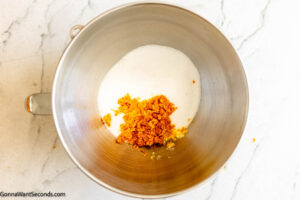
- In the bowl of a stand-up mixer, add sugar (2 1/4 cups) and orange zest (1/4 cup). Set mixer, set on medium, beat until mixture is very fragrant, about 2 minutes; set aside.
- In a medium mixing bowl, whisk together flour (3 1/3 cups), salt (1 teaspoon), baking powder (2 1/4 teaspoons), and baking soda (3/4 teaspoon); set aside.
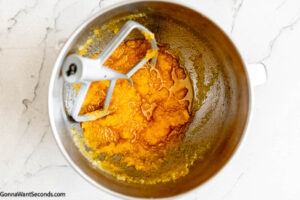
- In the bowl of a stand mixer, beat the oil (1 1/3 cups) and sugar/zest mixture until light and fluffy, 4-6 minutes.
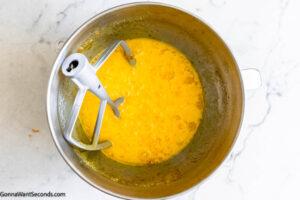
- Add eggs (4), one at a time, beating just until the yolk disappears and is incorporated into the batter.
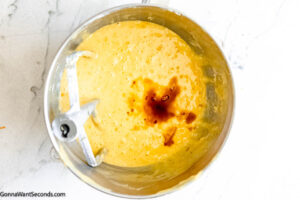
- With the mixer set on low, add orange juice (1 1/3 cups) and flour mixture, alternating, beginning and ending with flour. Stir in vanilla extract (2 teaspoons).
- Pour batter evenly into prepared pans. Place in staggered positions on middle oven shelf and bake 20 minutes, rotate pans, then loosely tent pans. Continue to bake 10-15 minutes more, or until a toothpick inserted in center comes out clean.
Orange Soak:
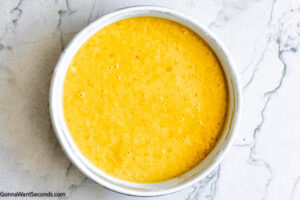
- While the cakes are baking, prepare orange syrup. Add water (1/3 cup), orange juice (1/3 cup), and sugar (1 cup) to a small saucepan. Bring to a boil, then reduce the heat and simmer until the sugar is dissolved.
- Allow the cake to cool for about 5 to 7 minutes. It will still be warm. Pierce the cake all over the top surface with a toothpick. While the cakes are still warm, using a pastry brush, apply the orange soak over the entire surface of the cake layers. Pour some down the sides of the cake then continue to brush the surface until the soak is gone. Allow your cake to cool completely in pan, then invert onto parchment paper.
Frosting
- In the bowl of a stand mixer fitted with a paddle attachment, cream your butter (1 1/3 cups) for 2 minutes until it's light and fluffy.
- Gradually add the confectioners' sugar (6 cups) while mixing on a low speed. Ensure that each batch of powdered sugar is mixed into the butter well before adding in the next batch.
- Add the cream cheese (16 ounces), orange zest (2 1/2 tablespoons), and vanilla extract (2 teaspoons). Mix just until the frosting is smooth.
Frost The Cake
- Place the first layer of cake on the serving plate. Use an offset spatula to spread frosting on top of the layer.
- Lay the second cake on top of the frosted cake (frosting will be in the center).
- Apply a thicker layer of frosting to the top and sides of the cake. Use the offset spatula to spread the frosting smoothly.
Notes
- Eggs: Be sure to have these at room temperature. It makes a significant difference in how they incorporate into the batter, yielding the optimal result. Here are the specifics:
- When eggs are at room temperature, they incorporate air better, which improves the texture of the cake, making it light and fluffy.
- When room-temperature eggs are used, cakes tend to rise better and more uniformly.
- They will mix into the batter more evenly. When eggs are cold, they tend to cause the cake batter to cool too quickly, which can lead to an uneven texture.
- How to Bring Eggs to Room Temp: It’s easy to forget to set your eggs out on the counter to bring them to room temperature before you begin preparing the cake. If this happens to you, simply place them in a bowl of warm (not hot!) water for approximately 15 minutes before you begin baking.
- When Zesting: It’s much easier to zest the oranges before juicing them! When you zest the oranges, try not to zest too deeply. The orange part of the peel, the white pith, is bitter.
- Freezing Zest: Did you know that you can freeze citrus zest? When using lemons or oranges, zest them first and freeze them. If you prefer, slowly collect orange zest over time. Anytime you eat an orange, zest it first! To freeze zest, place the zest on wax or parchment paper on a cookie sheet. Spread the zest on the paper and then flash freeze it (it will freeze quickly). Once frozen, store it in a freezer bag for later. When you make this cake, you will need ¼ cup plus 3 tablespoons of zest. Once enough is collected, go ahead and make this cake. Baking the cake will go much faster! Don’t forget to juice a few oranges too (1 ¼ cup) and freeze them too!
- Juicing The Oranges: When juicing any type of citrus fruit, to extract more juice, roll the fruit on the counter with your palm, leaning into it, applying pressure. This breaks the cell walls, which releases more juice. You can instead warm the fruit slightly in the microwave for about 10-15 seconds. Warm citrus yields more juice than cold.
- If you have an electric juicer, use it. Doing so yields more juice from the fruit than hand-squeezing does.
- Crust Color: Do not be alarmed if the baked cake is brown on the outside. This batter will brown in the oven. It will be orange on the inside, just as it’s supposed to be.
Nutrition
Serving: 1serving | Calories: 1144kcal | Carbohydrates: 148g | Protein: 9g | Fat: 60g | Saturated Fat: 25g | Polyunsaturated Fat: 16g | Monounsaturated Fat: 15g | Trans Fat: 1g | Cholesterol: 154mg | Sodium: 411mg | Potassium: 275mg | Fiber: 2g | Sugar: 117g | Vitamin A: 1316IU | Vitamin C: 24mg | Calcium: 103mg | Iron: 2mg