
This post may contain affiliate links. Please read our disclosure policy.
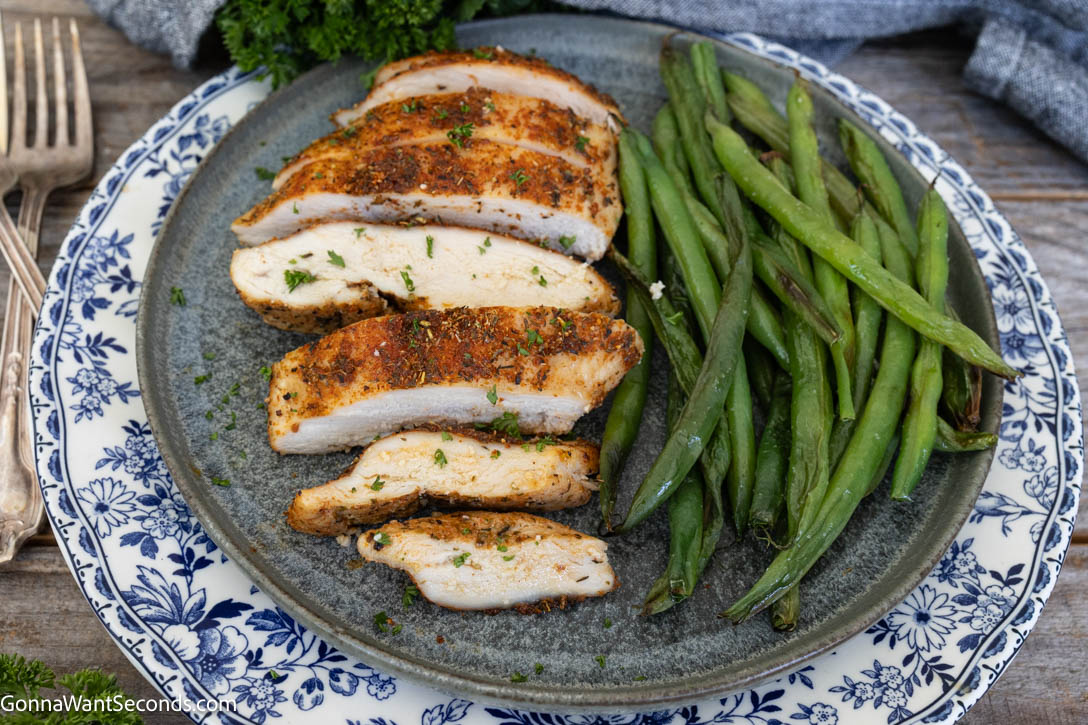
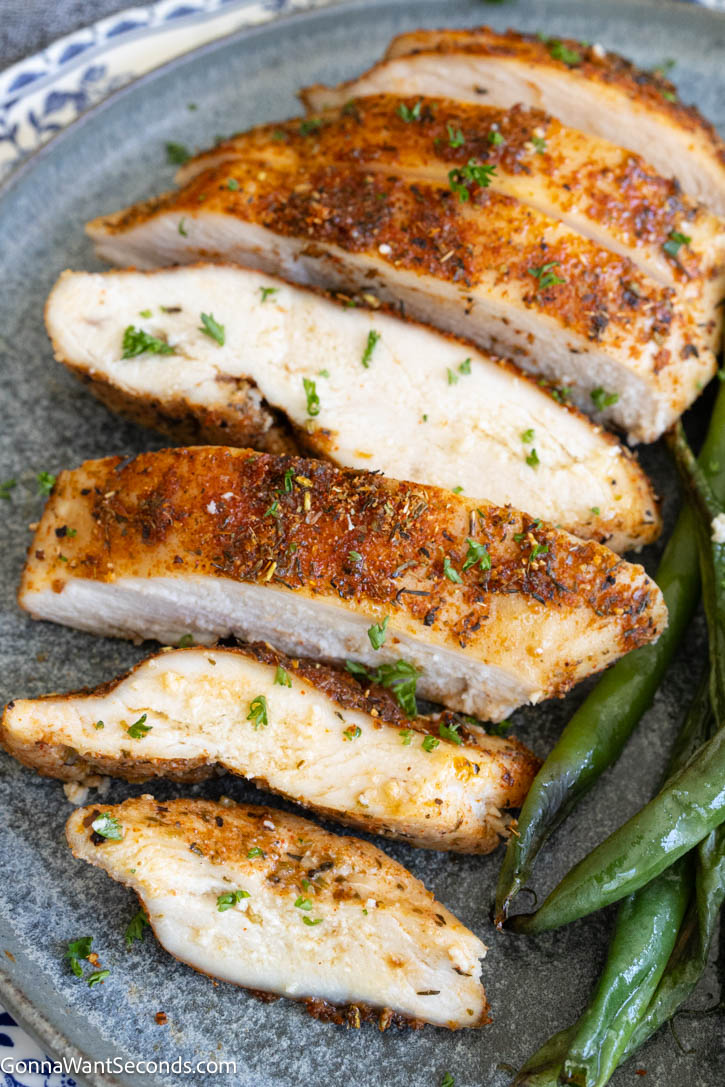
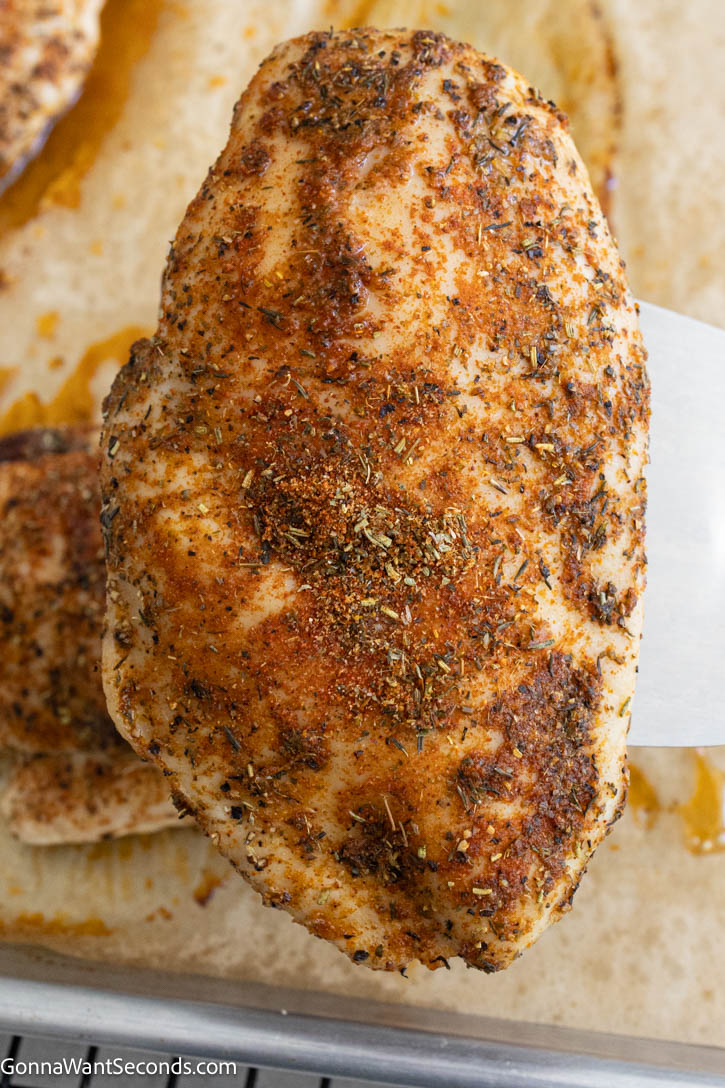
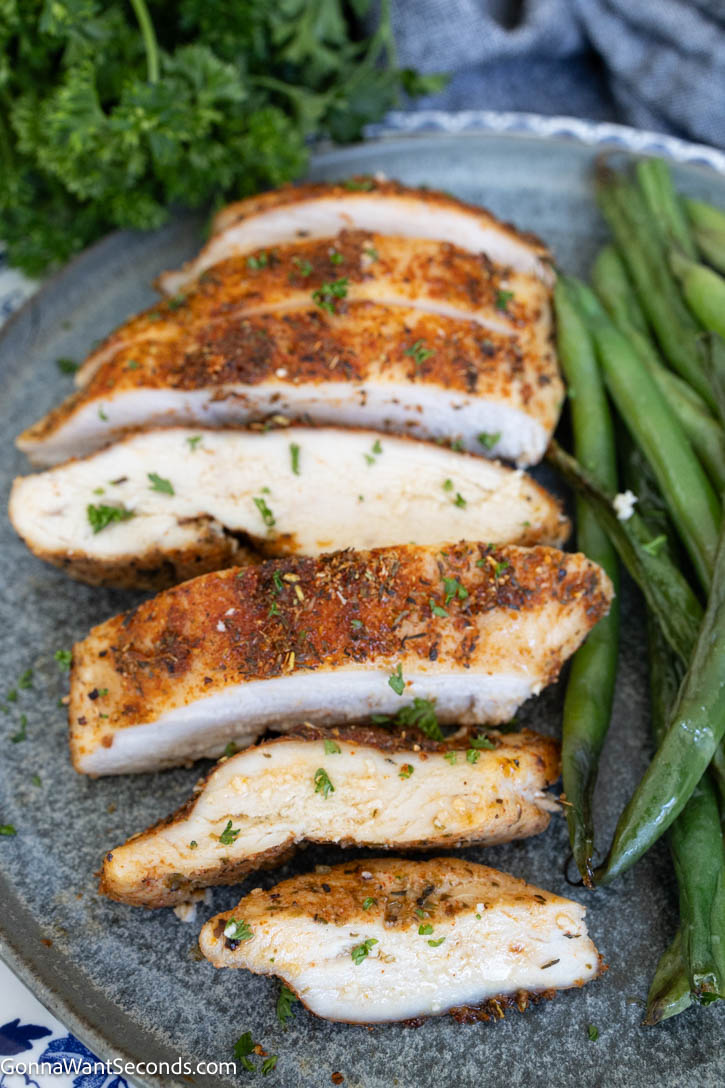
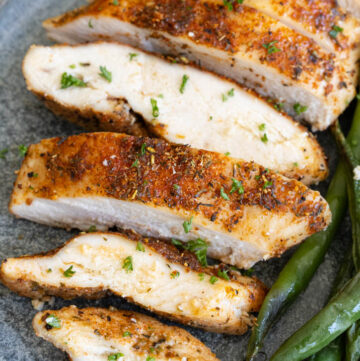
This baked boneless chicken breast is tender, juicy, and perfectly seasoned every single time—with a lightly golden exterior and a moist, flavorful center. If you’ve ever struggled with dry, bland chicken, this method fixes that for good.
What makes this recipe work is a simple, reliable system: high heat for browning, even thickness for consistent cooking, and pulling the chicken at just the right temperature so it stays juicy. No complicated steps, no guesswork—just dependable, weeknight-friendly chicken that actually turns out right.
If you love easy chicken dinners, be sure to try my Million Dollar Chicken, Baked Chicken Leg Quarters, or browse the Chicken Dinner Recipes collection for more cozy favorites.
How to Bake Boneless Chicken Breast (Quick Answer)
To bake juicy chicken breast, pound it to an even thickness, season it generously, and bake it at 425°F until it reaches 155°F internally. Let it rest for 5 minutes so the juices redistribute and the temperature rises to a safe finished temperature.
That keeps the whole article aligned around one clear method: pull at 155°F + rest.
✨ Before You Begin
✨ Chicken size affects cook time. Larger chicken breasts (7–8 ounces) will take longer to cook, while smaller ones may be done a few minutes sooner—start checking early.
✨ Even thickness matters. If your chicken breasts are thick on one end and thin on the other, gently pound them to an even thickness so they cook evenly.
✨ Pat the chicken dry. Moisture on the surface prevents browning—dry chicken = better color and flavor.
✨ Use a high oven temperature. Baking at 425°F helps seal in juices and gives you that lightly golden exterior.
✨ Let it rest. Resting for 5 minutes after baking keeps the juices inside the chicken instead of running out.
Baked Boneless Chicken Breast Ingredients + Key Notes
This is just a quick glance at what you’ll need. For exact measurements and the full ingredient list, head down to the recipe card below.
Optional quick brine: If you’d like extra-juicy chicken, brine the chicken breasts in 4 cups cold water, 1/3 cup kosher salt, and 3 tablespoons sugar for 20–30 minutes. Pat dry well before seasoning. If brining, omit the salt from the seasoning mix and use all remaining rub ingredients as directed.
Boneless, skinless chicken breasts: Try to use evenly sized pieces for consistent cooking.
Olive oil: Helps the seasoning stick and promotes browning.
Salt + pepper: Essential for flavor. If you brine the chicken, omit the salt from the rub but still use the pepper as directed.
Garlic powder + paprika: Adds depth and a subtle savory warmth.
Italian seasoning: Brings that classic, cozy flavor.
Brown sugar: A small amount helps round out the seasoning blend and balances the savory spices without making the chicken taste sweet.
🥣 How to Make Baked Chicken Breast
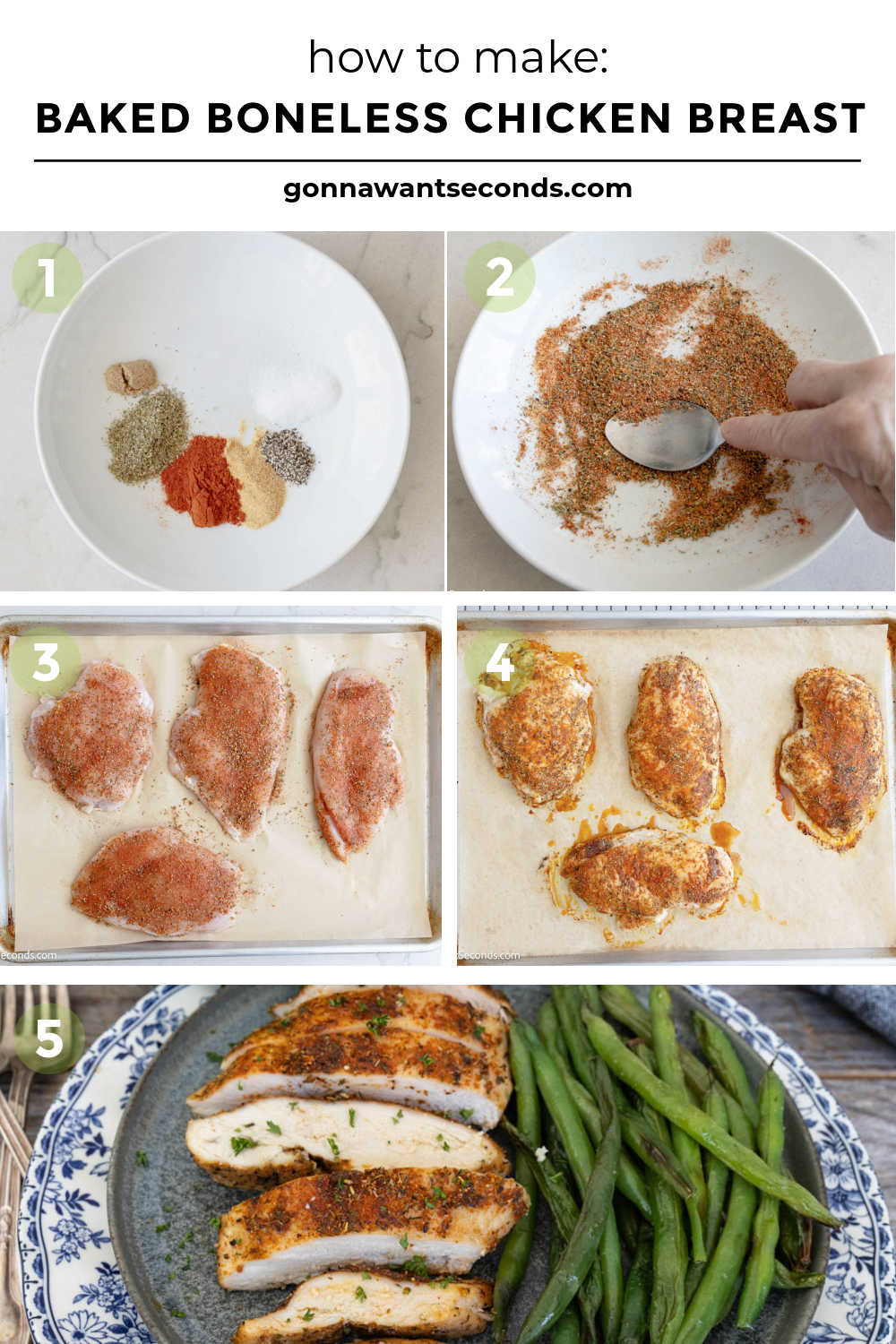
Optional quick brine. For extra-juicy chicken, combine 4 cups cold water, 1/3 cup kosher salt, and 3 tablespoons sugar. Stir until dissolved, then add the chicken and soak for 20–30 minutes. Remove the chicken and pat very dry before seasoning. If brining, omit the salt from the seasoning mix.
Prep the oven and pan. Preheat your oven to 425°F and line a baking sheet with foil or parchment paper for easy cleanup.
Prepare the chicken. Pat the chicken breasts dry with paper towels. If needed, pound them to an even thickness so they cook at the same rate.
Season the chicken. Brush both sides with olive oil, then season evenly with the salt, pepper, garlic powder, paprika, and Italian seasoning.
Arrange and bake. Place the chicken breasts on the prepared baking sheet, leaving space between each piece. Bake for 12–16 minutes, but start checking at 12 minutes. The chicken is done when the internal temperature reaches 155°F. The temperature will continue to rise as the chicken rests.
Rest and serve. Let the chicken rest for 5 minutes before slicing or serving so the juices stay in the meat.
⭐ Pro Tips
⭐ Use a meat thermometer. This is the easiest way to guarantee juicy chicken—no guessing.
⭐ Pull at 155°F. The temperature will continue rising as it rests, finishing juicy instead of overcooked.
⭐ Don’t overbake. Most dry chicken comes from just a few minutes too long in the oven.
⭐ Give it space. Don’t crowd the pan—airflow helps with browning.
⭐ Pepper: Peppercorns are often added to brines, but most of their flavor doesn’t actually transfer into the chicken. For the best flavor, season the chicken directly before baking — that’s where it really makes a difference.
⚠️ Why Your Chicken Turns Out Dry (And How to Fix It)
If you’ve struggled with dry chicken before, you’re not alone—this is one of the most common kitchen frustrations.
Overcooking:
Chicken breast is very lean, so even a few extra minutes can dry it out.
👉 Use a thermometer and pull at 150-155°F.
Uneven thickness:
Thin ends overcook while thick centers finish cooking.
👉 Pound to even thickness before baking.
Low oven temperature:
Cooking too low for too long dries out the meat.
👉 Bake at 425°F instead.
Skipping the rest time:
Cutting too soon lets juices run out.
👉 Rest at least 5 minutes before slicing.
🔬 Cooking Science
Chicken breast is naturally low in fat, which means it doesn’t have much protection against moisture loss. As it cooks, the proteins tighten and push out water—this is what causes dry chicken.
Using a higher oven temperature helps cook the outside quickly while keeping the inside tender. Pulling the chicken slightly early prevents overcooking, and resting allows the juices to redistribute evenly.
If you choose to brine, the salt helps the meat retain moisture by altering the protein structure—adding extra insurance against dryness.
🛠️ Too Dry? Here’s How to Fix It
Even if your chicken turns out a little overdone, you can still save it:
Slice and add moisture:
Slice thin and drizzle with warm broth, butter, or pan juices.
Turn it into shredded chicken:
Shred and mix with sauce for tacos, pasta, or casseroles.
Serve with sauce:
Pair with gravy, Alfredo, or a creamy dressing to bring back moisture.
What to Serve With Baked Chicken Breast
Fresh + Crisp Sides
A light side balances the chicken beautifully. Try a 1905 Salad or Cucumber Tomato Salad for something fresh and bright.
Comforting Sides
Mashed Potatoes, Buttered Noodles, or Creamed Corn turn this into a cozy, classic dinner.
Cozy Breads
Homemade Crescent Roll or Garlic Bread are perfect for rounding out the meal.
Sweet Finishes
Finish with chewy Frosted Brownies, Cherry Pineapple Dump Cake, or No Bake Pineapple Pie for an easy, crowd-pleasing dessert.
Storing + Reheating + Freezing + Make-Ahead
Storing
Store leftover chicken in an airtight container in the refrigerator for up to 4 days.
Reheating
Reheat gently in the microwave or in a covered skillet with a splash of broth or water to help keep the chicken moist.
Freezing
To freeze, let the chicken cool completely, then store it in a freezer-safe container for up to 3 months. Thaw overnight in the refrigerator before reheating.
Make-Ahead
You can season the chicken up to 1 day in advance and store it covered in the refrigerator until you’re ready to bake.
Frequently Asked Questions
◆ Does chicken breast size affect baking time?
Yes. Smaller chicken breasts cook faster, while larger ones (like 7–8 ounces) take longer. Always start checking early and use a thermometer for best results.
◆ Is it better to bake chicken at 350 or 425?
425°F is better for juicy chicken. It cooks faster and reduces moisture loss.
◆ Should I bake chicken covered or uncovered?
Bake uncovered. Covering traps steam and prevents browning.
◆ How do I keep chicken breast moist in the oven?
Use high heat, don’t overcook, and let it rest before slicing. Optional brining helps too.
◆ Why is my chicken rubbery?
Usually from overcooking or cooking too slowly at a low temperature.
◆ Do I need to flip chicken while baking?
No—high heat cooking eliminates the need to flip.
Hope that answers your questions—now you’re ready to make perfectly juicy baked chicken every time! 💗
More Baked Chicken Recipes
If you loved how juicy and easy this baked chicken breast turned out, here are a few more oven-baked favorites to try next:
- Baked Chicken Drumsticks – budget-friendly, family-friendly, and perfect for weeknights
- Oven Baked BBQ Chicken Thighs – sticky, caramelized, and packed with bold flavor
Looking for more? Browse all of my baked chicken recipes in one place → Chicken Dinner Recipes collection.
Tried This Recipe?
Love recipes like this one? Don’t miss the next! Sign up for my FREE newsletter and get family favorites delivered weekly.
If you enjoyed this recipe, please take a moment to leave a star rating and a quick comment — I love hearing from you!
Thanks for stopping by my kitchen today — happy cooking, friends! ❤️ Kathleen
Baked Boneless Chicken Breast (Juicy, Never Dry)
Ingredients
- 4 (7-8 ounce) boneless skinless chicken breasts
- 2 tablespoons olive oil
- 1 teaspoon salt
- 3/4 teaspoon black pepper
- 1 3/4 teaspoons garlic powder
- 1 3/4 teaspoons paprika
- 1 3/4 teaspoons Italian seasoning
- 3/4 teaspoon brown sugar
Instructions
- Preheat the oven: Set your oven to 425°F (218ºC) and line a baking sheet with foil or parchment paper for easy cleanup.
- Prep the chicken: Pat the chicken breasts dry with paper towels. If needed, pound them to an even thickness for consistent cooking.
- Mix the seasoning: In a small bowl, combine the salt, pepper, garlic powder, paprika, Italian seasoning, and brown sugar (if using).
- Season the chicken: Brush both sides with olive oil, then sprinkle the seasoning mixture evenly over both sides.
- Arrange on pan: Place the chicken breasts on the prepared baking sheet, leaving space between each piece for even airflow.
- Bake. Bake for 12–16 minutes, starting to check at 12 minutes. Cook until the internal temperature reaches 155°F, using a meat thermometer (the temperature will continue to rise as the chicken rests).
- Rest before serving: Remove from the oven and let the chicken rest for 5 minutes so the juices redistribute and the temperature finishes rising.
- Slice and serve: Slice against the grain or serve whole with your favorite sides.
Fans Also Made:
None found
Notes
- Use a meat thermometer. This is the easiest way to guarantee juicy chicken—no guessing.
- Pull at 155°F. The temperature will continue rising as it rests, finishing juicy instead of overcooked.
- Don’t overbake. Most dry chicken comes from just a few minutes too long in the oven.
- Give it space. Don’t crowd the pan—airflow helps with browning.
- Pepper: Peppercorns are often added to brines, but most of their flavor doesn’t actually transfer into the chicken. For the best flavor, season the chicken directly before baking — that’s where it really makes a difference.
Nutrition



Leave a Reply