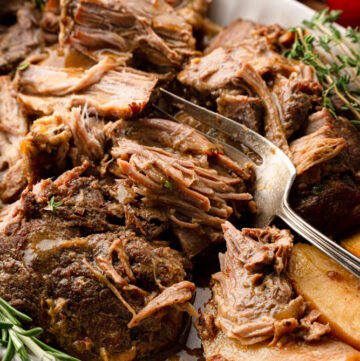
Apple Cider Braised Pork Shoulder
Apple cider braised pork shoulder cooks low and slow until fall-apart tender, with sweet-tart apples, red onions, and a savory cider-Dijon sauce.
Servings 8 servings
Calories 336kcal
Ingredients
Pork
- 4 - 5 pounds boneless or bone-in pork shoulder/Boston butt
- 1 1/2 teaspoons table salt
- 1 teaspoon freshly ground black pepper
- 2 tablespoons neutral oil
Apple Cider Braise
- 2 medium red onions, cut into thick wedges
- 5 cloves garlic minced
- 2 tablespoons all-purpose flour
- 2 tablespoons Dijon mustard
- 2 cups fresh apple cider
- 1 cup low-sodium chicken broth
- 2 tablespoons apple cider vinegar
- 1 tablespoon Worcestershire sauce
- 5 sprigs fresh thyme
- 5–6 fresh sage leaves
- 2 sprigs fresh rosemary
- 2 dried bay leaves
- 1/2 teaspoon crushed red pepper flakes, optional
To Finish
- 2 large Honeycrisp or Pink Lady apples unpeeled, cored, and cut into 6–8 thick wedges each
- 1 teaspoon apple cider vinegar plus more as needed
- 1 tablespoon unsalted butter optional
- table salt and freshly ground black pepper to taste
- fresh thyme or chopped parsley for garnish
Instructions
- Prep the pork. Preheat the oven to 325°F (163ºC). Pat the pork (4 - 5 pounds) dry and trim away any very thick exterior fat. If using boneless pork shoulder, cut it into 3–4 large pieces. If using bone-in pork shoulder, cut the meat into several large pieces where possible, leaving the portion surrounding the bone intact. Season all over with the salt (1 1/2 teaspoons) and pepper (1 teaspoon).
- Sear the pork. Heat the oil (2 tablespoons) in a 5 1/2–7-quart Dutch oven over medium-high heat. Working in batches if necessary, sear the pork for 3–4 minutes per side, until deeply browned. Transfer to a plate.
- Cook the onions and garlic. Reduce the heat to medium. Add the red onions (2) and cook for 4–5 minutes, stirring occasionally, until the edges begin to brown. Add the garlic (5 cloves) and cook for 30 seconds.
- Add the flour and Dijon. Sprinkle the flour (2 tablespoons) over the onions and cook for 1 minute, stirring constantly. Stir in the Dijon mustard (2 tablespoons).
- Build the braising liquid. Slowly pour in the apple cider (2 cups) while scraping up the browned bits from the bottom of the pot. Add the chicken broth (1 cup), 2 tablespoons apple cider vinegar, Worcestershire sauce (1 tablespoon), thyme (5 sprigs), sage (5–6 leaves), rosemary (2 sprigs), bay leaves (2), and red pepper flakes (1/2 teaspoon), if using.
- Return the pork to the pot. Bring the liquid to a gentle simmer. Return the pork and any accumulated juices to the Dutch oven. The braising liquid should come approximately halfway up the sides of the pork.
- Braise the pork. Cover the Dutch oven and transfer it to the preheated oven. Braise for 2–2 1/2 hours, until the pork is beginning to become tender.
- Add the apples. Tuck the apple wedges around the pork and onions. Cover and return to the oven for 45 minutes, until the pork is fork-tender and pulls apart easily and the apples are tender but still hold their shape.
- Reduce the sauce. Transfer the pork and apples to a platter. Discard the bay leaves and herb stems. Place the Dutch oven over medium heat and simmer the sauce uncovered for 5–10 minutes, until reduced and glossy.
- Balance the sauce. Stir 1 teaspoon apple cider vinegar into the reduced sauce. Taste and season with additional table salt, black pepper, and cider vinegar as needed.
- Finish the sauce. Remove the Dutch oven from the heat. If using, stir in the butter (1 tablespoon) until melted and the sauce is smooth and glossy.
- Serve. Return the pork and apples to the sauce, or arrange them on a serving platter and spoon the cider-Dijon sauce and onions over the top. Garnish with fresh thyme or chopped parsley.
Notes
- Choose the right cider. Use fresh, nonalcoholic apple cider rather than apple juice or hard cider. Apple cider provides a deeper, more concentrated apple flavor that stands up to the long braise.
- Don't rush the sear. Deeply browning the pork creates much of the savory flavor that balances the sweetness of the cider and apples.
- Keep the pork in large pieces. Cutting the shoulder into several large pieces gives you more browned surface area while keeping the finished pork substantial rather than completely shredded.
- Add the apples toward the end. Adding them during the final 45 minutes allows them to soften and absorb the braising liquid without disappearing into the sauce.
- Balance the sauce before serving. Apple cider varies considerably in sweetness. Taste the finished sauce and add extra cider vinegar, 1 teaspoon at a time, if it needs additional brightness.
Nutrition
Serving: 1serving | Calories: 336kcal | Carbohydrates: 20g | Protein: 29g | Fat: 15g | Saturated Fat: 5g | Polyunsaturated Fat: 4g | Monounsaturated Fat: 6g | Cholesterol: 96mg | Sodium: 626mg | Potassium: 702mg | Fiber: 2g | Sugar: 13g | Vitamin A: 158IU | Vitamin C: 8mg | Calcium: 49mg | Iron: 2mg