
This post may contain affiliate links. Please read our disclosure policy.
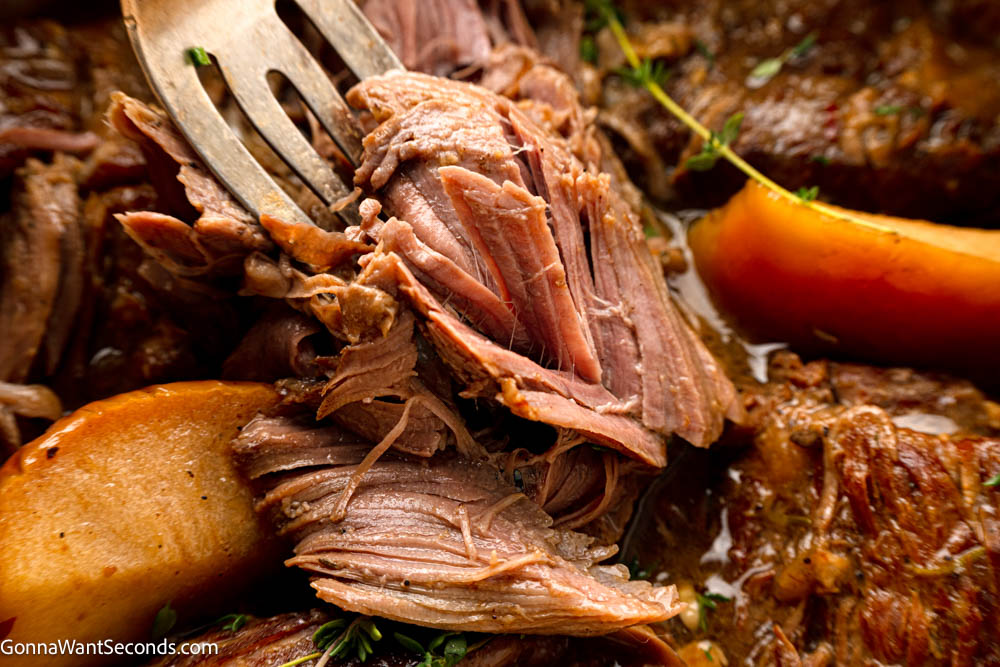
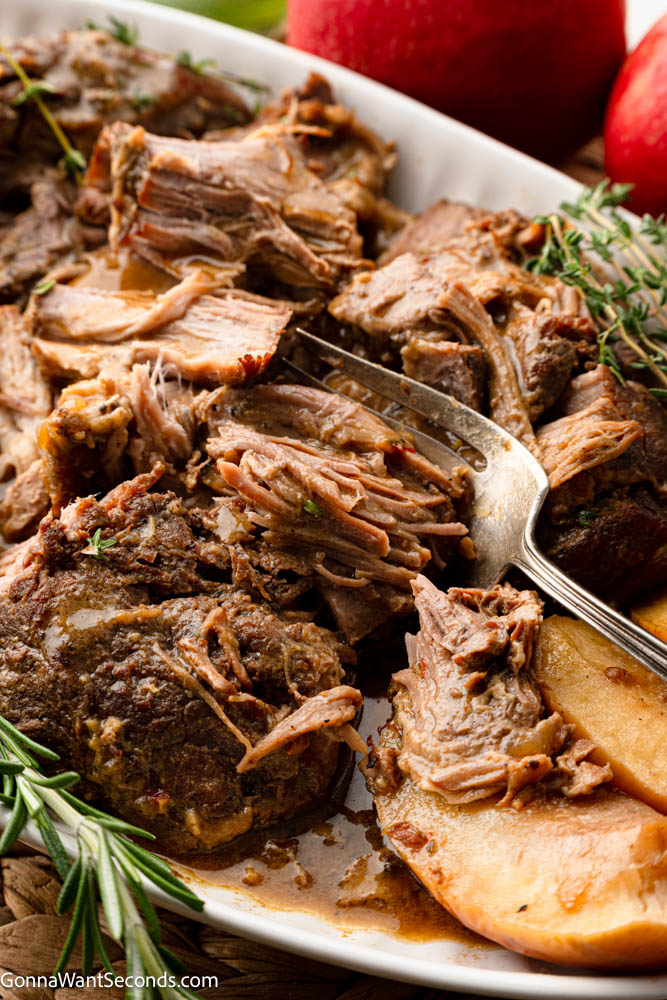
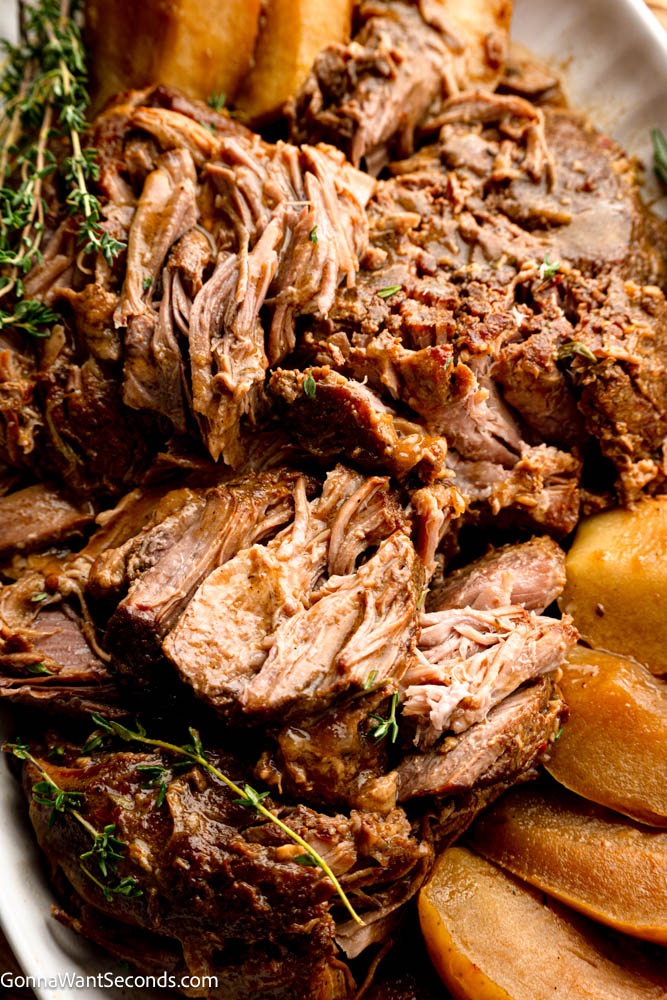
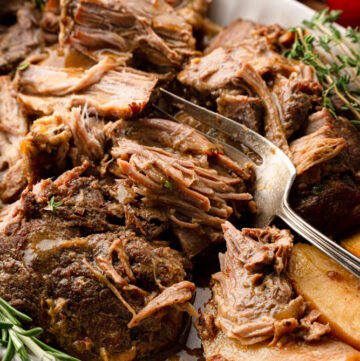
Apple Cider Braised Pork Shoulder is the kind of cozy dinner I start craving as soon as fall rolls around. The pork cooks low and slow until it’s fall-apart tender, surrounded by sweet-tart apples and red onions in the most delicious savory apple cider-Dijon sauce. Browning the pork first gives the sauce tons of flavor, while fresh herbs, Worcestershire, and a splash of cider vinegar keep the apples and cider from making it too sweet.
If you love cozy pork dinners, try my Dutch Oven Pork Butt, Pork Stew, Baked Pork Tenderloin, and Crockpot Pork Tenderloin next.
✨ Before You Begin
✨ Use apple cider, not apple juice. Fresh, nonalcoholic apple cider has a deeper, more complex apple flavor and is less one-dimensionally sweet than apple juice.
✨ Get a really good sear on the pork. Those deeply browned surfaces—and all the browned bits left behind in the pot—build the savory flavor that balances the sweet cider and apples.
✨ Cook the pork until it’s truly tender. Pork shoulder can vary, so use the cooking time as a guide. It’s ready when a fork slides in easily and the meat pulls apart with very little resistance. If it’s still tough, it simply needs more time.
Ingredients + Key Notes
Pork shoulder: You can use boneless or bone-in pork shoulder, also called Boston butt. This well-marbled cut becomes incredibly tender during the long, slow braise. Don’t substitute a lean cut such as pork loin or pork tenderloin; they aren’t suited to this cooking method.
Apple cider: Use fresh, nonalcoholic apple cider—not apple juice or hard cider. Its concentrated, slightly tangy apple flavor is the backbone of the sauce.
Apples: Honeycrisp or Pink Lady apples are ideal because they have plenty of sweet-tart flavor and hold their shape well during cooking. Leave the peel on to help the wedges stay intact.
Red onions: They soften and become sweet during the long braise while adding savory depth to the cider sauce.
Dijon mustard: Adds tang and savory complexity without making the finished sauce taste strongly of mustard.
Apple cider vinegar: This is important for balance. It cuts through the richness of the pork and keeps the cider and apples from making the sauce overly sweet. A little more is added at the end so you can adjust the finished sauce to taste.
Worcestershire sauce: Adds a subtle savory, umami note that deepens the sauce and complements the browned pork.
Fresh herbs: Thyme, sage, rosemary, and bay leaves infuse the braising liquid as the pork cooks. Fresh herbs work especially well here because of the long cooking time.
Chicken broth: Use low-sodium broth so you have better control over the seasoning as the braising liquid reduces.
Flour: Just 2 tablespoons give the cider braising liquid a little body and help it reduce into a glossy sauce rather than a thin broth.
Butter: This is optional, but stirring it into the sauce at the end gives it an extra-smooth, glossy finish.
🥣 How to Make Apple Cider Braised Pork Shoulder
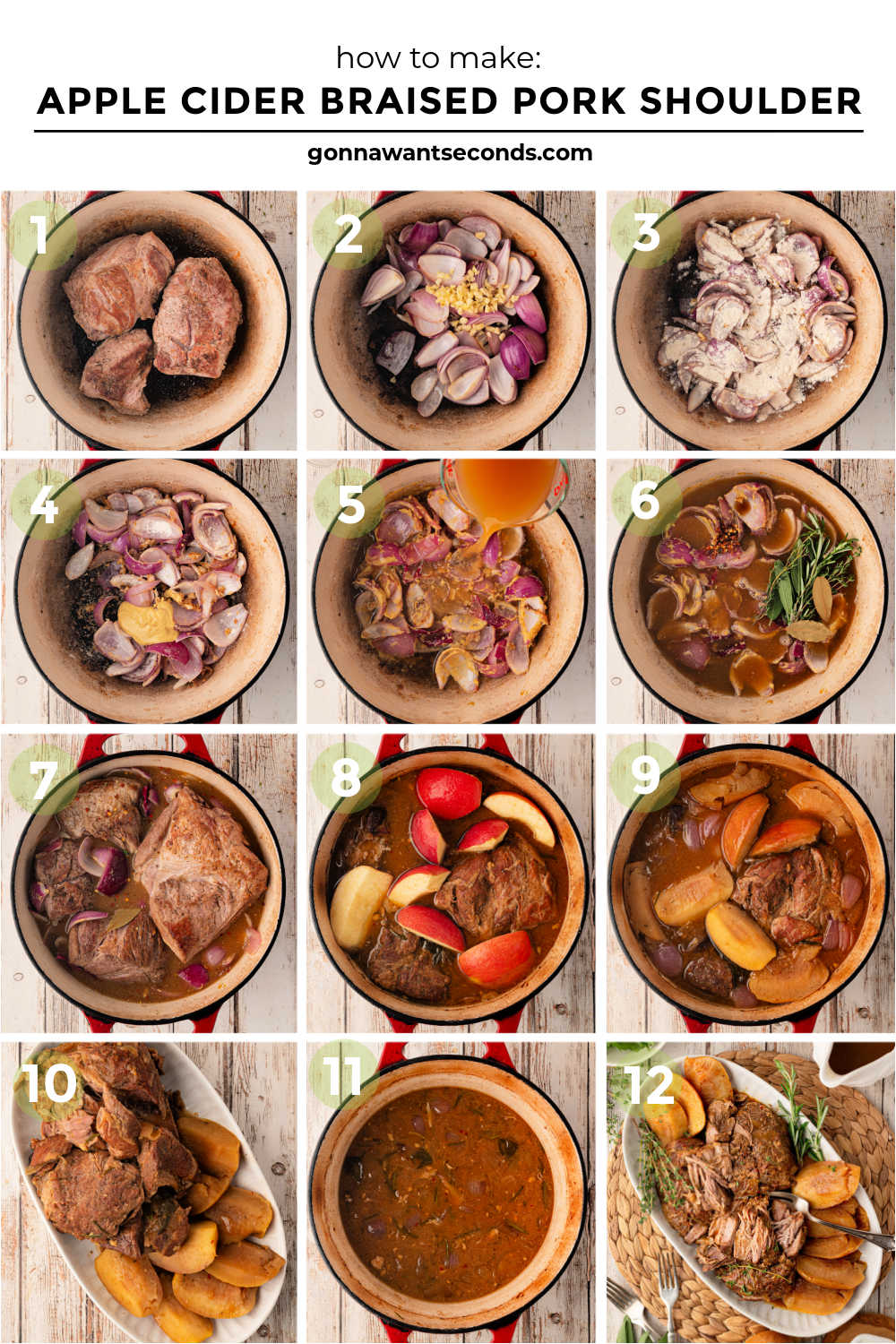
Prep and season the pork. Pat the pork dry, trim any very thick exterior fat, cut it into large pieces as directed, and season with salt and pepper.
Sear the pork. Brown the pork well on all sides in a hot Dutch oven, then transfer it to a plate.
Sauté the aromatics. Cook the red onions until they begin to brown around the edges. Add the garlic and cook briefly.
Start the sauce. Sprinkle the flour over the onions and cook for 1 minute, then stir in the Dijon mustard.
Add the braising liquid. Slowly pour in the apple cider, scraping up all those flavorful browned bits from the bottom of the pot. Stir in the chicken broth, cider vinegar, Worcestershire, fresh herbs, bay leaves, and red pepper flakes.
Braise the pork. Return the pork and its juices to the Dutch oven. Bring the liquid to a gentle simmer, cover, and braise in the oven until the pork begins to become tender.
Add the apples. Tuck the apple wedges around the pork and onions. Cover and continue cooking until the apples are tender and the pork easily pulls apart with a fork.
Finish the sauce. Transfer the pork and apples to a platter and discard the herb stems and bay leaves. Simmer the braising liquid until reduced and glossy. Stir in the cider vinegar, season to taste, and add the butter, if using.
Serve. Return the pork and apples to the sauce or arrange them on a platter and spoon the cider-Dijon sauce and onions generously over the top.
⭐ Pro Tips
⭐ Keep the pork pieces large. Large pieces give you more surface area for browning than a whole roast but still leave you with substantial, juicy pieces of pork instead of completely shredded meat.
⭐ Don’t crowd the pot when searing. If necessary, brown the pork in batches. Crowding traps steam and makes it much harder to develop that deep brown crust.
⭐ The braising liquid shouldn’t cover the pork. You want it to come about halfway up the sides of the meat. The pork will release additional juices as it cooks.
⭐ Leave the apple peels on. The peel helps the wedges hold their shape during braising and gives the finished dish beautiful color.
⭐ Taste the sauce after reducing it. Apple cider varies in sweetness, so the final adjustment is important. If the sauce tastes a little too sweet or flat, add cider vinegar, 1 teaspoon at a time, until the flavors brighten.
⭐ Let tenderness—not the clock—tell you when the pork is done. If the pork doesn’t pull apart easily with a fork, cover the pot and give it a little more time.
⭐ Serve it with plenty of the finished sauce. Spoon the cider-Dijon sauce, softened onions, and apples over the pork just before serving. If you’re serving it over egg noodles, mashed potatoes, or polenta, add extra sauce so the starch can soak up all that flavor.
Serving Recommendations
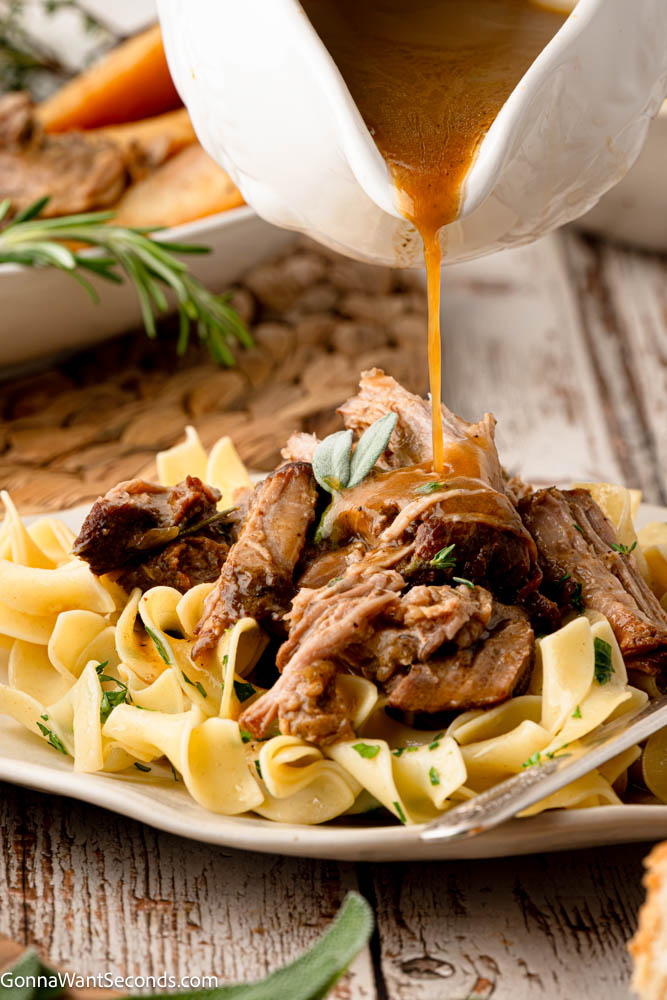
Apple Cider Braised Pork Shoulder is especially good served over buttered noodles, mashed potatoes, or creamy polenta—anything that can soak up plenty of that cider-Dijon sauce. A loaf of crusty bread is another easy option for catching every last bit of sauce.
For vegetables, try cheesy roasted Brussels sprouts, Southern green beans, or roasted carrots and potatoes. A simple green salad with a tangy vinaigrette is also a nice contrast to the rich, tender pork.
For a cozy fall dinner, I love pairing it with cheesy roasted Brussels sprouts and finishing the meal with an apple dessert like apple cobbler, apple crisp, or apple pie with crumb topping.
Storing + Freezing + Make-Ahead Instructions
Storing: Let the pork cool, then refrigerate it with the apples, onions, and sauce in an airtight container for up to 4 days. Keeping the pork in the sauce helps it stay moist.
Freezing: Freeze the pork and sauce in an airtight, freezer-safe container for up to 3 months. The apples will soften after freezing and thawing, so for the best texture, you can remove them before freezing.
Reheating: Reheat the pork gently with the sauce in a covered pot over low heat until warmed through. You can also reheat individual portions in the microwave. If the sauce has thickened too much in the refrigerator, stir in a splash of chicken broth or apple cider.
Make-ahead: This is a great dish to make a day ahead. Refrigerate the pork in its sauce overnight, then remove any solidified fat from the surface before gently reheating. For the best-looking apples, take care not to over-stir them as the pork reheats.
Frequently Asked Questions
What is the best cut of pork for braising?
Pork shoulder, also called Boston butt or pork butt, is ideal for braising. It has plenty of fat and connective tissue that break down during the long, slow cooking time, making the pork exceptionally tender and juicy.
Can I use pork loin instead of pork shoulder?
I don’t recommend it. Pork loin is much leaner than pork shoulder and can become dry during the long braising time this recipe requires.
Can I use apple juice instead of apple cider?
Apple cider is best for this recipe. It has a deeper, more concentrated apple flavor and more complexity than apple juice, which can make the finished sauce taste sweeter and less balanced.
Can I use bone-in pork shoulder?
Yes. Both bone-in and boneless pork shoulder work well. If using bone-in, cut the meat into several large pieces where possible and leave the portion surrounding the bone intact.
Why is my braised pork shoulder still tough?
It needs more time. Pork shoulder becomes tender as its connective tissue breaks down during slow cooking. If it’s still difficult to pull apart with a fork, cover the Dutch oven and continue braising until the meat is fork-tender.
What are the best apples for braised pork?
Honeycrisp and Pink Lady apples are great choices because they have a sweet-tart flavor and hold their shape well when cooked. Keep the peel on to help the wedges stay intact during braising.
More Pork Recipes You’ll Love
- Crock Pot Pork Chops (Smothered in Mushroom Gravy) – Tender pork chops slow-cooked in a rich, creamy gravy for an easy comfort-food dinner.
- Stuffed Pork Tenderloin – A beautiful pork tenderloin filled with a savory stuffing that’s special enough for company.
- Crockpot Pulled Pork – Fall-apart-tender pork cooked low and slow until it’s perfect for shredding.
- Instant Pot Pork Chops – Tender, juicy pork chops made quickly in the pressure cooker for an easy weeknight dinner.
- Pan Seared Pork Chops – A simple stovetop pork chop recipe with a beautifully browned crust and juicy center.
- Shake and Bake Pork Chops – Crispy, oven-baked pork chops with a flavorful seasoned coating for an easy family dinner.
Hungry for More?
Get my latest recipes delivered straight to your inbox! From easy weeknight dinners to cozy comfort-food favorites, I’ll help you get something delicious on the table without making dinner complicated.
Sign up for my free newsletter and let’s make dinner easier!
Tried This Recipe?
I’d love to hear how your Apple Cider Braised Pork Shoulder turned out! Please leave a star rating and a comment below—your feedback helps other readers and lets me know which recipes you’re loving.
And if you snap a photo, share it on Instagram and tag @gonna_want_seconds so I can see what you made!
Thanks for stopping by, and I hope you enjoy this recipe as much as we do! Kathleen 🩷
Apple Cider Braised Pork Shoulder
Ingredients
Pork
- 4 - 5 pounds boneless or bone-in pork shoulder/Boston butt
- 1 1/2 teaspoons table salt
- 1 teaspoon freshly ground black pepper
- 2 tablespoons neutral oil
Apple Cider Braise
- 2 medium red onions, cut into thick wedges
- 5 cloves garlic minced
- 2 tablespoons all-purpose flour
- 2 tablespoons Dijon mustard
- 2 cups fresh apple cider
- 1 cup low-sodium chicken broth
- 2 tablespoons apple cider vinegar
- 1 tablespoon Worcestershire sauce
- 5 sprigs fresh thyme
- 5–6 fresh sage leaves
- 2 sprigs fresh rosemary
- 2 dried bay leaves
- 1/2 teaspoon crushed red pepper flakes, optional
To Finish
- 2 large Honeycrisp or Pink Lady apples unpeeled, cored, and cut into 6–8 thick wedges each
- 1 teaspoon apple cider vinegar plus more as needed
- 1 tablespoon unsalted butter optional
- table salt and freshly ground black pepper to taste
- fresh thyme or chopped parsley for garnish
Instructions
- Prep the pork. Preheat the oven to 325°F (163ºC). Pat the pork (4 - 5 pounds) dry and trim away any very thick exterior fat. If using boneless pork shoulder, cut it into 3–4 large pieces. If using bone-in pork shoulder, cut the meat into several large pieces where possible, leaving the portion surrounding the bone intact. Season all over with the salt (1 1/2 teaspoons) and pepper (1 teaspoon).
- Sear the pork. Heat the oil (2 tablespoons) in a 5 1/2–7-quart Dutch oven over medium-high heat. Working in batches if necessary, sear the pork for 3–4 minutes per side, until deeply browned. Transfer to a plate.
- Cook the onions and garlic. Reduce the heat to medium. Add the red onions (2) and cook for 4–5 minutes, stirring occasionally, until the edges begin to brown. Add the garlic (5 cloves) and cook for 30 seconds.
- Add the flour and Dijon. Sprinkle the flour (2 tablespoons) over the onions and cook for 1 minute, stirring constantly. Stir in the Dijon mustard (2 tablespoons).
- Build the braising liquid. Slowly pour in the apple cider (2 cups) while scraping up the browned bits from the bottom of the pot. Add the chicken broth (1 cup), 2 tablespoons apple cider vinegar, Worcestershire sauce (1 tablespoon), thyme (5 sprigs), sage (5–6 leaves), rosemary (2 sprigs), bay leaves (2), and red pepper flakes (1/2 teaspoon), if using.
- Return the pork to the pot. Bring the liquid to a gentle simmer. Return the pork and any accumulated juices to the Dutch oven. The braising liquid should come approximately halfway up the sides of the pork.
- Braise the pork. Cover the Dutch oven and transfer it to the preheated oven. Braise for 2–2 1/2 hours, until the pork is beginning to become tender.
- Add the apples. Tuck the apple wedges around the pork and onions. Cover and return to the oven for 45 minutes, until the pork is fork-tender and pulls apart easily and the apples are tender but still hold their shape.
- Reduce the sauce. Transfer the pork and apples to a platter. Discard the bay leaves and herb stems. Place the Dutch oven over medium heat and simmer the sauce uncovered for 5–10 minutes, until reduced and glossy.
- Balance the sauce. Stir 1 teaspoon apple cider vinegar into the reduced sauce. Taste and season with additional table salt, black pepper, and cider vinegar as needed.
- Finish the sauce. Remove the Dutch oven from the heat. If using, stir in the butter (1 tablespoon) until melted and the sauce is smooth and glossy.
- Serve. Return the pork and apples to the sauce, or arrange them on a serving platter and spoon the cider-Dijon sauce and onions over the top. Garnish with fresh thyme or chopped parsley.
Fans Also Made:


Notes
- Choose the right cider. Use fresh, nonalcoholic apple cider rather than apple juice or hard cider. Apple cider provides a deeper, more concentrated apple flavor that stands up to the long braise.
- Don't rush the sear. Deeply browning the pork creates much of the savory flavor that balances the sweetness of the cider and apples.
- Keep the pork in large pieces. Cutting the shoulder into several large pieces gives you more browned surface area while keeping the finished pork substantial rather than completely shredded.
- Add the apples toward the end. Adding them during the final 45 minutes allows them to soften and absorb the braising liquid without disappearing into the sauce.
- Balance the sauce before serving. Apple cider varies considerably in sweetness. Taste the finished sauce and add extra cider vinegar, 1 teaspoon at a time, if it needs additional brightness.



Leave a Reply