

This post may contain affiliate links. Please read our disclosure policy.
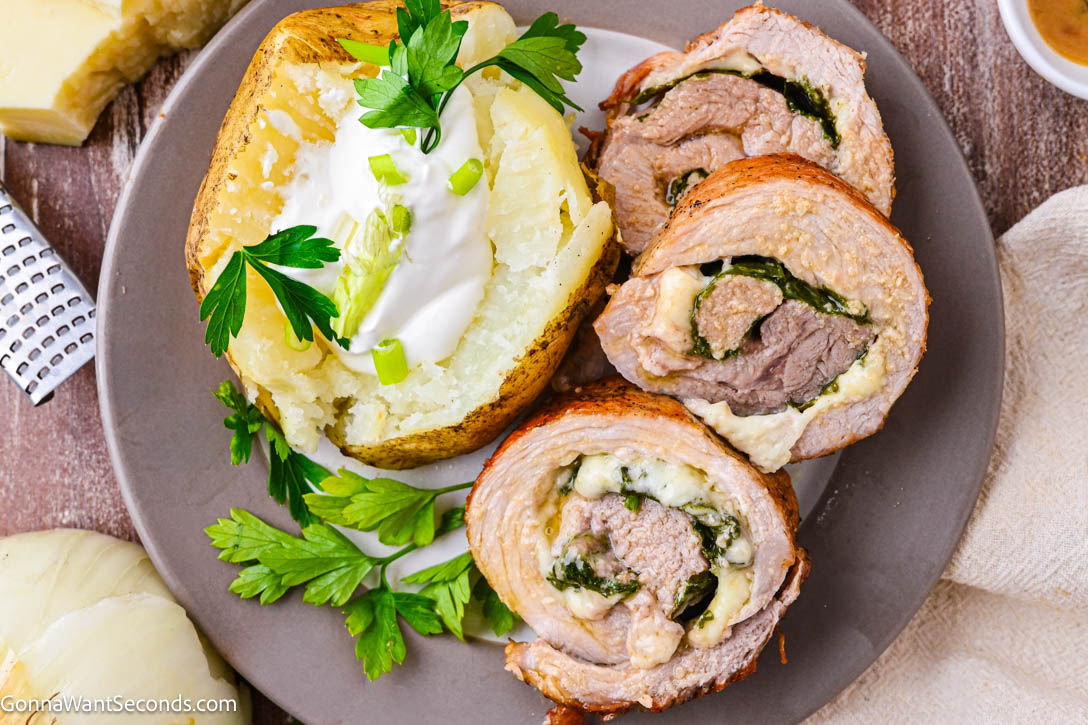
This stuffed pork tenderloin is juicy, tender, and packed with flavor, all wrapped around a cozy spinach + Gruyère filling and finished with a silky white wine cream sauce. It’s the kind of dinner that feels a little fancy but is surprisingly easy to pull off at home.
The secret is in the technique. Butterflying the tenderloin helps it cook evenly, while a quick sear builds flavor before it goes in the oven. Pulling it at 140–145°F keeps the pork perfectly juicy (no dry pork here), and reducing the wine before adding the cream creates a sauce that’s rich, balanced, and absolutely irresistible.
If you love cozy, restaurant-style dinners like my Million Dollar Chicken, Chicken Lombardy, and Grilled Boneless Pork Chops, you’re going to be obsessed with this stuffed pork tenderloin. And if you need an easier option for busy nights, my Crockpot Pork Tenderloin is always a reader favorite.
Cozy, cheesy, and completely doable on a weeknight—this is one of those dinners that feels special without the extra work.
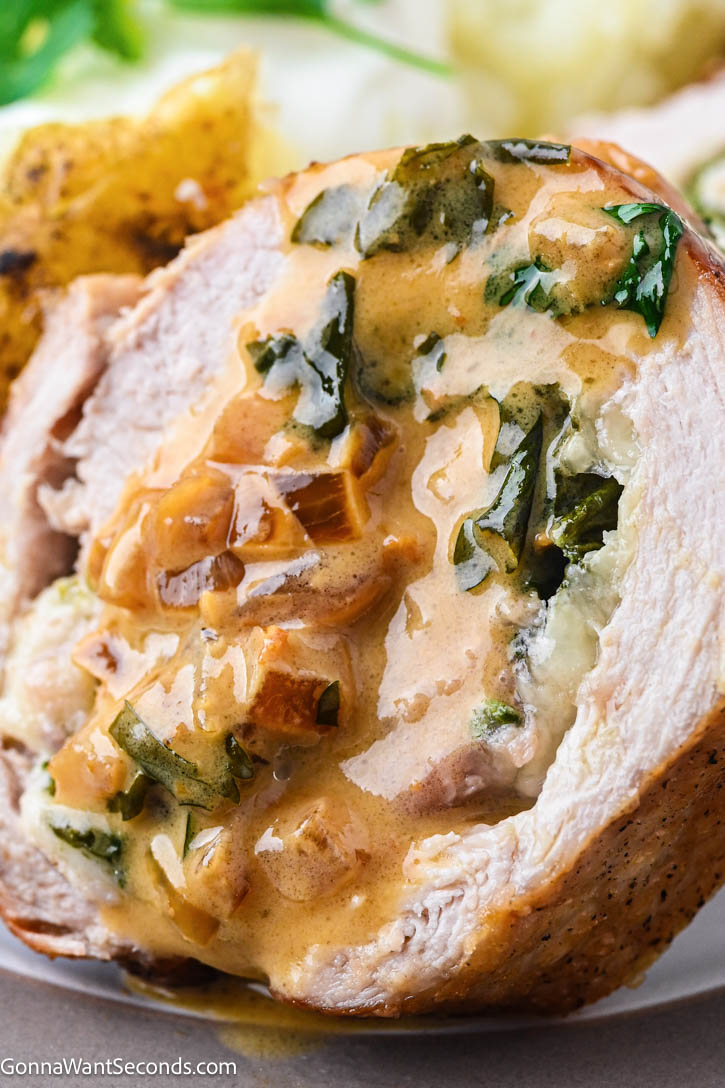
✨ Before You Start
✨ This recipe assumes 2 tenderloins (about 2 pounds total)—most packages labeled “2 pounds pork tenderloin” are two smaller tenderloins, not one giant piece.
✨ Butterfly and pound the pork to about ½-inch thick so it rolls easily and cooks evenly without drying out.
✨ Use freshly grated Gruyère if you can—pre-shredded doesn’t melt as smoothly and can leak more.
✨ Don’t skip the sear. It adds major flavor and gives your sauce those browned bits (fond) to scrape up.
✨ For juicy pork, pull it from the oven at 140–145°F and let it rest—carryover heat finishes the job.
Stuffed Pork Tenderloin Ingredients + Key Notes
Pork Tenderloin + Filling
Pork tenderloin (2 lbs total / typically 2 tenderloins): A naturally lean cut, so even thickness and proper temperature are key to keeping it juicy.
Spinach (1 cup): Chop it finely so it layers evenly and doesn’t create gaps when rolling.
Gruyère (1½ cups, grated): Nutty, melty, and just salty enough to flavor the pork. You can use up to 2 cups, but more cheese increases the chance of it melting out during searing.
Oil: Use a high-heat oil like avocado, vegetable, or canola for searing. Olive oil works well for rubbing the outside before cooking.
White Wine Cream Sauce
Butter (4 Tbsp, divided): Half for sautéing, half whisked in at the end for a glossy, restaurant-style finish.
Onion: Finely diced so it melts into the sauce and adds flavor without texture.
Dry white wine: Pinot Grigio or Sauvignon Blanc are great choices. Avoid sweet wines—they’ll throw off the balance.
Heavy cream (¼ cup): Just enough to round out the wine and create a silky sauce without making it heavy.
Parsley: Adds freshness and color right at the end.
🥣 How to Make Stuffed Pork Tenderloin
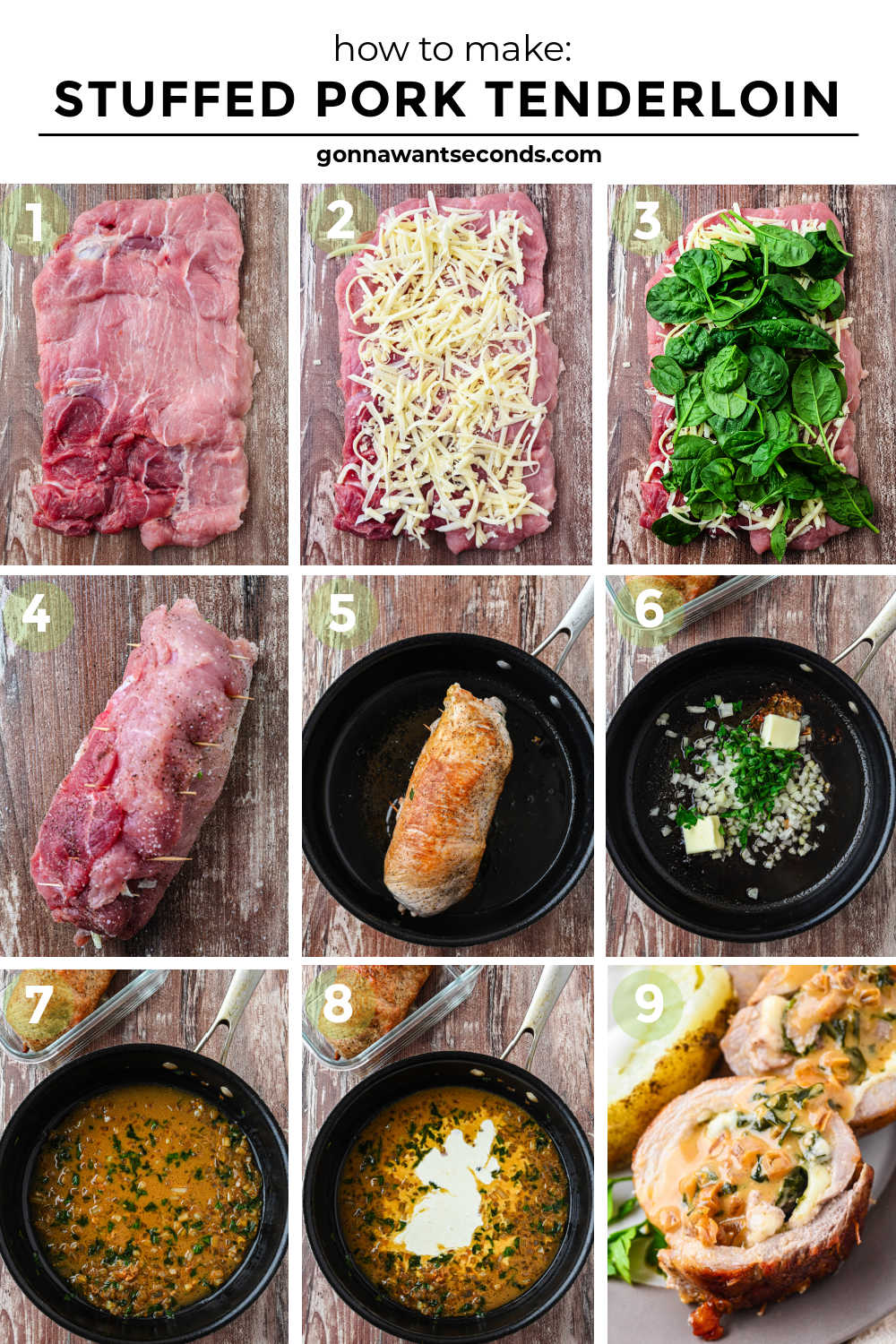
Here’s a quick look at how to make this stuffed pork tenderloin with white wine cream sauce (full instructions in the recipe card below).
Start by butterflying each pork tenderloin lengthwise, leaving about ½ inch intact so it opens like a book. Cover with plastic wrap and gently pound to an even ½-inch thickness so the pork cooks evenly.
Season the inside, then layer with chopped spinach and grated Gruyère, leaving a small border around the edges. Roll the tenderloin tightly, secure it with toothpicks or kitchen twine, rub the outside with oil, and season all over.
Sear the pork in a hot skillet until browned on all sides, then transfer it to a baking dish and bake at 375°F until the thickest part reaches 140–145°F. Let it rest for 10 minutes before slicing.
While the pork rests, make the sauce in the same skillet. Sauté the onion in butter, add parsley, pour in the white wine, and scrape up the browned bits. Let the wine reduce by about half, then stir in the cream and finish with butter until smooth and glossy.
Slice the rested pork into medallions, spoon the sauce over the top, and serve warm.
White Wine Cream Sauce (What Makes This So Good)
This is what sets this stuffed pork tenderloin apart.
After searing the pork, you build the sauce in the same pan so all those browned bits (fond) get worked back in—that’s where the flavor really comes from. The white wine reduces first, which concentrates the flavor and keeps the sauce from tasting heavy.
Adding the cream at the end softens the acidity and makes it silky, while finishing with butter gives it that glossy, restaurant-style finish.
The result is a sauce that’s rich and flavorful without being overpowering—perfect for spooning over each slice of pork
How to Butterfly and Roll Stuffed Pork Tenderloin (Without Losing the Filling)
This is the step that makes everything else work.
Start by slicing the tenderloin lengthwise, stopping about ½ inch from the bottom so it opens like a book. Cover it with plastic wrap and gently pound it to an even thickness—this helps it cook evenly and makes rolling much easier.
When adding the filling, leave a small border around the edges. This gives the spinach and cheese room to spread as you roll without spilling out.
Roll the pork tightly from the long side, then secure it with toothpicks or kitchen twine. A tight roll keeps the filling inside and helps the pork hold its shape while cooking.
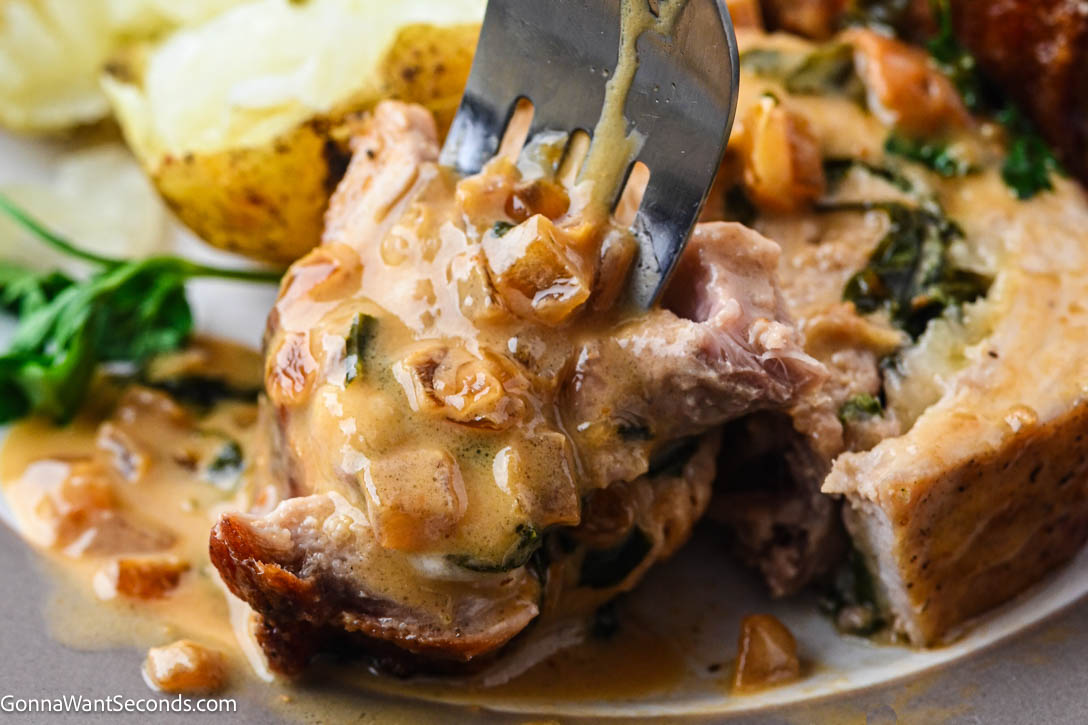
⭐ Pro Tips
⭐ Pull the pork early—then trust the rest.
Tenderloin dries out fast if you chase a high final temp. Pull it at 140–145°F, then let it rest for 10 minutes so the pork stays juicy and tender.
⭐ Leave a border so the filling stays put.
That little ½-inch edge around the spinach and cheese makes rolling cleaner and helps prevent the cheese from bubbling out into the pan.
⭐ Reduce the wine before adding cream.
This is the difference between “thin and winey” and “silky and balanced.” Letting the wine reduce concentrates the flavor and softens the sharp edge.
⭐ Twine beats toothpicks for a tidy roll.
Toothpicks work, but kitchen twine gives you a snug, even roll and prettier slices. If you have it, use it
⚠️ Common Mistakes
Overcooking the pork
Pork tenderloin is lean, so it can dry out quickly. Pull it at 140–145°F and let it rest before slicing.
Overfilling the tenderloin
Too much spinach or cheese makes the roll harder to close and increases the chance of filling leaking out during searing.
Skipping the sear
Searing builds flavor and gives the pork a beautiful color before it finishes in the oven.
Adding cream before the wine reduces
Let the wine reduce first so the sauce tastes balanced instead of sharp or thin.
🔬 Cooking Science
Pork tenderloin is lean, which means it doesn’t have much internal fat to protect it from drying out. Butterflying and pounding it to an even thickness helps it cook evenly, and pulling it at 140–145°F prevents the muscle fibers from tightening too much. In the sauce, reducing the wine first softens the sharp alcohol edge and concentrates flavor, while whisking in butter off heat helps create that glossy, velvety finish.
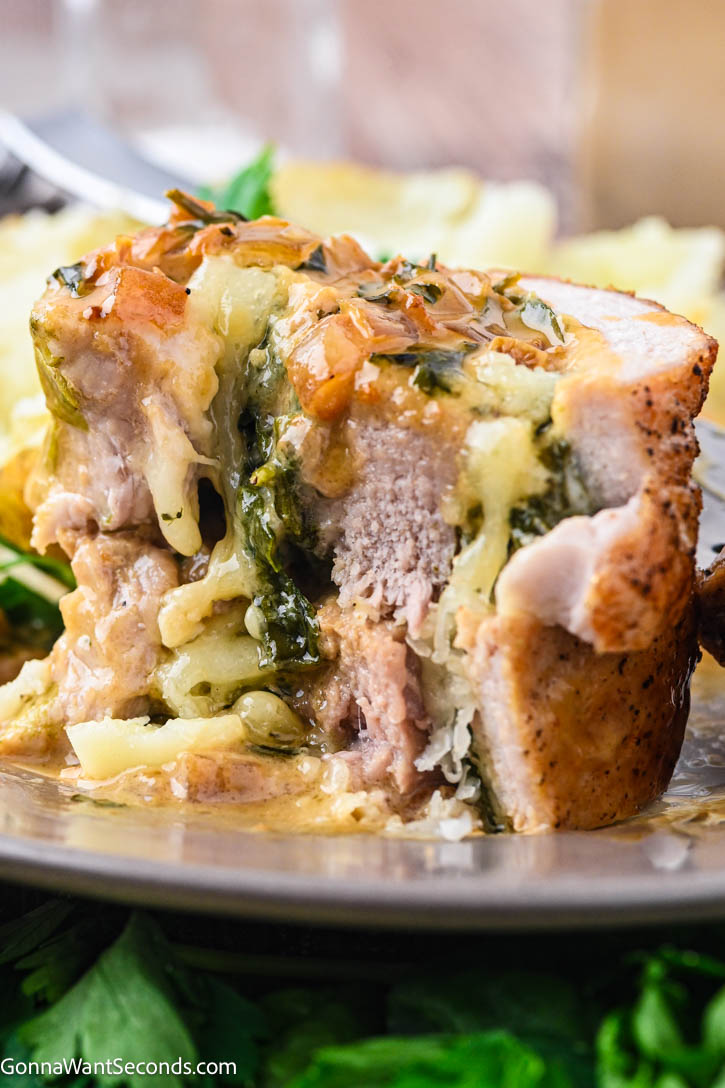
Can I Make Stuffed Pork Tenderloin Ahead of Time?
Yes, and it’s a great option for entertaining.
You can assemble the stuffed and rolled tenderloin up to a day in advance. Wrap it tightly and refrigerate, then sear and bake when you’re ready to cook.
The sauce can also be made ahead and gently reheated before serving. If it thickens in the fridge, just add a splash of broth or cream to loosen it.
If you want to fully cook it ahead, slice and store it with the sauce, then reheat gently in a covered dish so the pork stays moist.
Then your storage section should be:
Storing + Reheating + Freezing Tips
Storing
Store sliced pork and sauce in an airtight container for up to 3–4 days in the refrigerator. If possible, keep the sauce separate so it stays smooth.
Reheating
For larger portions, cover the dish with foil and reheat in a 350°F oven for 15–20 minutes until warmed through. If the pork has been stored in a glass or ceramic baking dish, let it come closer to room temperature before placing it in a preheated oven to prevent shattering. Alternatively, transfer leftovers to an oven-safe pan before reheating.
For quick reheating, warm slices gently in the microwave at 50% power to avoid drying out, and warm the sauce separately.
Freezing
You can freeze the pork, sliced or whole, for up to 2 months, but cream sauces can sometimes separate after freezing. For best results, freeze the pork and make the sauce fresh when serving
What to Serve With Stuffed Pork Tenderloin
Fresh + Crisp Sides
This is amazing with Mediterranean Salad, 1905 Salad, Carrot Salad, or KFC Coleslaw for something cool and crunchy alongside the rich sauce.
Comforting Sides
For cozy, classic comfort, try Mashed Potatoes, Oven Roasted Mini Potatoes, Crockpot Cheesy Potatoes, Crack Potatoes, or Melting Potatoes to soak up every drop of that sauce.
Cozy Breads
A warm bread moment never hurts—go for Practically No Knead Bread, Lion House Rolls, Pull-Apart Garlic Bread, or Olive Garden Breadsticks.
Sweet Finishes
Keep dessert easy and comforting with Peach Cobbler, Chess Pie, Lemon Lush, or Frosted Fudge Brownies.
Frequently Asked Questions
◆ What is the best sauce for stuffed pork tenderloin?
A white wine cream sauce works beautifully because it’s rich without being heavy. Reducing the wine first gives the sauce depth, while a little cream and butter make it silky and smooth.
◆ What temperature should stuffed pork tenderloin be cooked to?
Cook stuffed pork tenderloin to 140–145°F in the thickest part, then let it rest for 10 minutes before slicing. The rest helps the juices settle and keeps the pork tender.
◆ How do I keep stuffed pork tenderloin from drying out?
Don’t overcook it. Pork tenderloin is very lean, so use a meat thermometer and pull it as soon as it reaches 140–145°F.
◆ How do I keep the filling from falling out?
Leave a small border around the filling, roll the pork tightly, and secure it with kitchen twine or toothpicks before searing.
◆ Can I use pork loin instead of pork tenderloin?
Pork loin is much larger and cooks differently, so it’s not a direct swap for this recipe. For best results, use pork tenderloin.
Still have questions? Drop them in the comments — I love helping you cook and bake with confidence! 💗
More Cozy Pork Recipes
-
Pork Stew — Cozy, hearty, and slow-simmered until the pork is melt-in-your-mouth tender with a rich, savory broth.
-
Crockpot Pork Chops — Set-it-and-forget-it pork chops that turn out ridiculously tender, with a comforting gravy-style sauce.
-
Instant Pot Pork Chops — Fast, weeknight-friendly pork chops with big flavor and a saucy finish—done in a fraction of the time.
-
Stuffed Pork Chops (restaurant quality) — Juicy, impressive, and dinner-party worthy—these are the pork chops you make when you want that steakhouse vibe at home.
-
Crock Pot Ranch Pork Chops — Creamy, tangy, and ultra-family-friendly—this is the “everyone cleans their plate” kind of pork chop dinner.
-
Crockpot Pulled Pork — Tender, shreddable pulled pork that’s perfect for sandwiches, sliders, nachos, and meal prep all week long.
Tried This Recipe?
💌 And while you’re here, don’t miss the next cozy recipe — subscribe to my totally FREE newsletter so you’ll always have comfort food favorites at your fingertips. 💌
If you enjoyed this recipe, please take a moment to leave ⭐️⭐️⭐️⭐️⭐️ star rating and a quick comment — I love hearing from you and it helps our community of bakers and cooks!
📸 And if you Gram… don’t forget to share your photo on Instagram — tag me @gonnawantseconds so I can cheer you on and share your creations!
Thanks for stopping by my kitchen today — happy cooking, friends! 💗 Kathleen

Stuffed Pork Tenderloin
Ingredients
Pork
- 2 pork tenderloins about 2 pounds total, room temperature
- 1 cup fresh spinach chopped
- 1 1/2 cups Gruyère cheese freshly grated (2 cups can be a bit leaky—this amount is more reliable)
- 1 tablespoon olive oil for rubbing
- 1 - 2 tablespoons high-heat oil avocado/vegetable/canola, for searing
- salt + black pepper to taste
- toothpicks or kitchen twine
White Wine Cream Sauce
- 4 tablespoons butter divided
- 1/2 cup onion finely diced
- 1/2 cup dry white wine
- 1/4 cup heavy cream
- 1 tablespoon parsley chopped
- salt + pepper to taste
Instructions
Butterfly the tenderloins
- Place a tenderloin on a cutting board. Using a sharp knife, slice lengthwise down the side, stopping about ½ inch from the bottom, and open it like a book.
- If needed, make one or two additional shallow lengthwise cuts so it opens wider.
- Cover with plastic wrap and gently pound to an even ½-inch thickness. Repeat with the second tenderloin.
Fill + roll
- Season the inside of each butterflied tenderloin with salt and pepper.
- Sprinkle spinach evenly over each, leaving a ½-inch border along the edges.
- Top with Gruyère (divide evenly).
- Roll each tenderloin up tightly (jelly-roll style). Secure with toothpicks or kitchen twine.
- Rub the outside with 1 tablespoon olive oil total and season all over with salt and pepper.
Sear
- Preheat oven to 375°F. Lightly grease a baking dish.
- Heat 1–2 tablespoons high-heat oil in a large skillet over medium-high heat.
- Sear tenderloins 1–2 minutes per side, rotating until browned all over.
Bake (don’t overcook)
- Transfer to the baking dish and bake 18–25 minutes, or until the thickest part reaches 140–145°F.
- Rest on a cutting board 10 minutes before slicing (carryover heat finishes the job and keeps it juicy).
White Wine Cream Sauce
Build the sauce in the same pan
- Carefully pour off excess oil from the skillet, leaving the browned bits (fond).
- Over medium-low heat, melt 2 tablespoons butter.
- Add onion and cook until softened, 3–4 minutes. Stir in parsley for the last 30 seconds.
- Pour in the wine and scrape up the browned bits. Simmer until reduced by about half (2–4 minutes).
- Stir in the cream and simmer gently 1–2 minutes until slightly thickened.
- Remove from heat and whisk in the remaining 2 tablespoons butter until smooth and glossy. Season to taste.
Serve
- Slice the rested tenderloin into medallions and spoon warm sauce over the top.
Fans Also Made:


Notes
- Pull the pork early—then trust the rest. Tenderloin dries out fast if you chase a high final temp. Pulling at 140–145°F and resting for 10 minutes gives you pork that’s juicy and tender, with the perfect finish.
- Leave a border so the filling stays put. That little ½-inch edge around the spinach and cheese makes rolling cleaner and helps prevent cheese from bubbling out into the pan.
- Reduce the wine before adding cream. This is the difference between “thin and winey” and “silky and balanced.” Letting the wine reduce concentrates flavor and softens the sharp edge.
- Twine beats toothpicks for a tidy roll. Toothpicks work, but kitchen twine gives you a snug, even roll (and prettier slices). If you have it, use it.
Nutrition



Leave a Reply