
This post may contain affiliate links. Please read our disclosure policy.
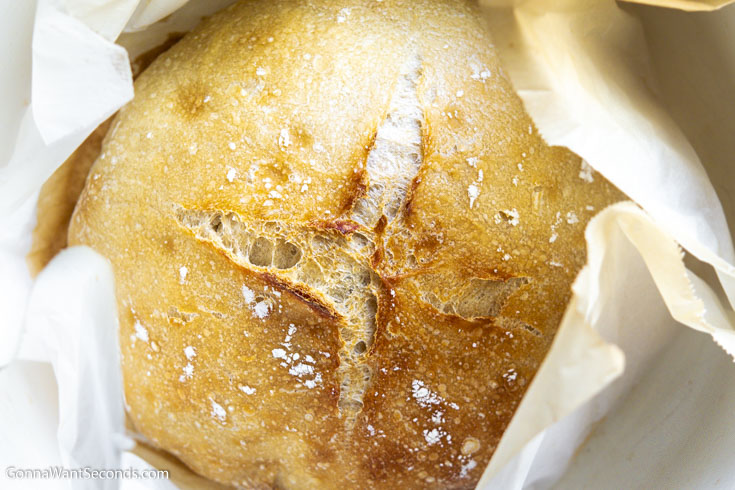
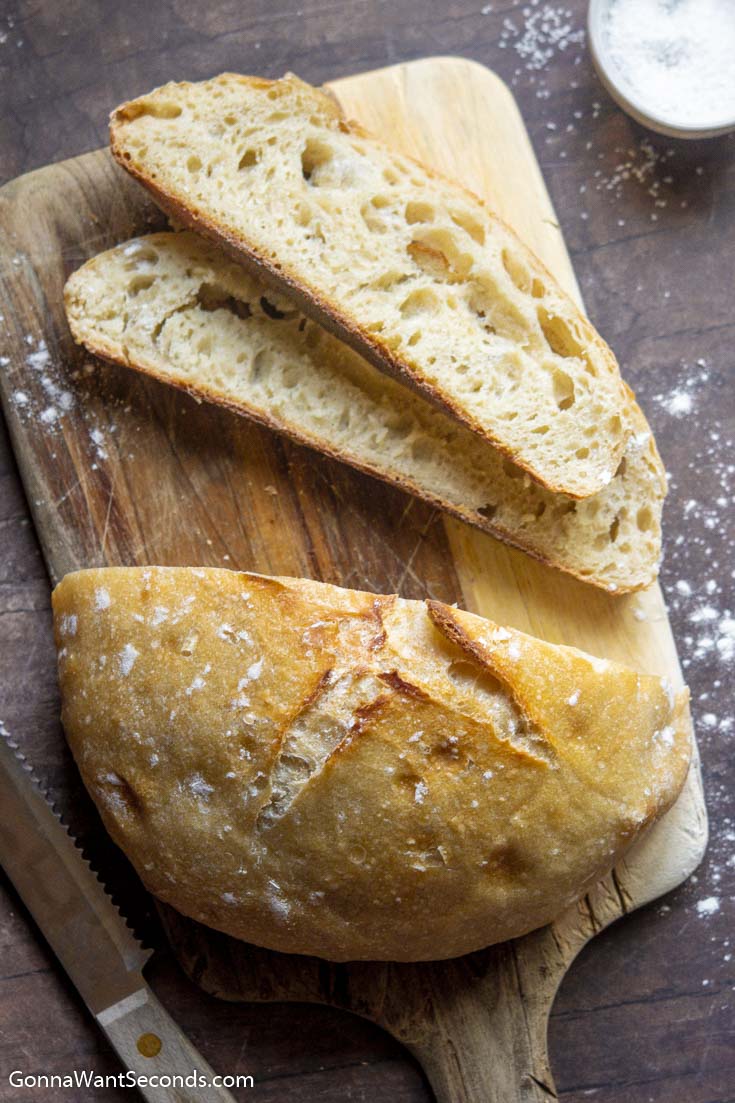
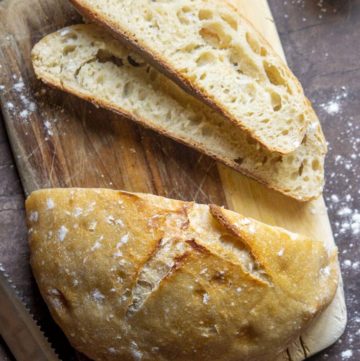
This Dutch oven bread is the kind of recipe that makes homemade bread feel completely doable—crackly and golden on the outside, soft and chewy on the inside, and surprisingly low-effort.
What makes this version stand out is the flavor. While most no knead breads rely on just flour, water, and yeast, this one uses a simple secret-ingredient combination—beer and a touch of vinegar—to create a deeper, more complex, bakery-style taste.
The long, slow rise develops structure and chew, while the Dutch oven traps steam for that irresistible crust. If you love cozy homemade breads, be sure to try my Homemade Crescent Rolls, Quick Dinner Rolls, or Lion House Rolls, too.
How to Make Dutch Oven Bread (Quick Answer)
To make Dutch oven bread, mix a simple no knead dough, let it rest for 12–18 hours, shape it, then bake it covered in a preheated Dutch oven at 425°F for 30 minutes. Remove the lid and bake until golden brown and the internal temperature reaches 205–210°F.
✨ Before You Begin
✨ This is a high-hydration dough: It will be sticky—that’s exactly what you want for a light, airy crumb.
✨ Plan ahead for the long rise: The dough needs 12–18 hours to develop flavor and structure.
✨ A Dutch oven is key: It traps steam, which creates that crisp, bakery-style crust.
✨ Use parchment for easy transfer: It prevents sticking and makes handling the dough much easier.
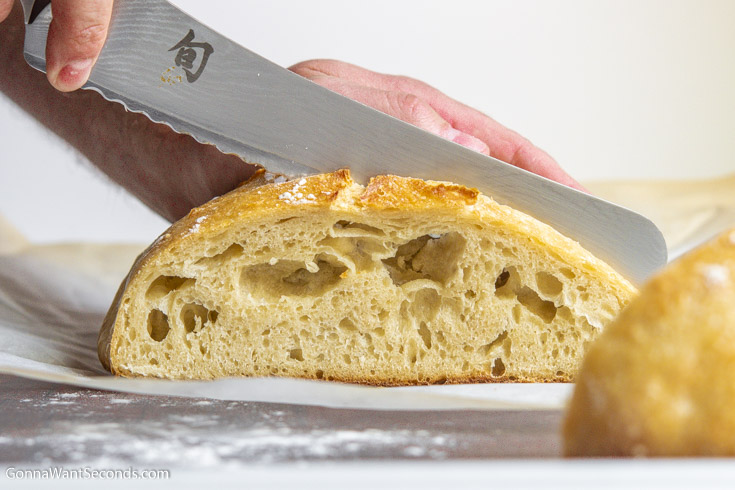
✨ Don’t rush the cooling time: The bread finishes setting as it cools—cutting too early can make it gummy.
Why Bake Bread in a Dutch Oven?
Baking bread in a Dutch oven mimics the environment of a professional bread oven.
- Trapped steam = better rise: Steam keeps the crust soft early on so the bread can expand fully.
- High heat retention: The heavy pot creates strong oven spring for a taller loaf.
- Crispy crust: Once the lid is removed, the crust turns beautifully golden and crackly.
This is what gives you that classic artisan bread texture at home—no special equipment needed.
Dutch Oven Bread Ingredients + Key Notes
This is just a quick glance at what you’ll need. For exact measurements and the full ingredient list, head down to the recipe card below.
All-Purpose Flour — Provides structure while keeping the crumb tender. For best results, spoon the flour into your measuring cup and level it off with a knife instead of scooping directly from the bag, which can pack in too much flour and make the bread dense instead of light and airy.
Salt — Enhances flavor and helps strengthen the dough. In a simple bread like this, even small measurement changes can affect the final result, so measure carefully.
Instant or Rapid-Rise Yeast — Only a small amount is needed because the long resting time allows the dough to slowly develop structure and flavor. Make sure your yeast is fresh for a proper rise.
Water — Use room-temperature water so the dough hydrates evenly and the yeast activates properly during the long fermentation.
Beer — Adds depth and subtle maltiness, giving this bread a more complex, bakery-style flavor. A light lager works best here; strongly hopped beers like IPAs can make the loaf taste bitter.
White Vinegar — Adds a slight tang and helps mimic the flavor complexity of artisan-style breads while also supporting gluten structure.
🥣 How to Make Dutch Oven Bread
Mix the dough: In a large bowl, stir together the flour, salt, and yeast. In a measuring cup, combine the water, beer, and vinegar, then pour it into the dry ingredients. Stir until a shaggy, sticky dough forms and no dry flour remains.
Let it rest: Cover the bowl tightly and let the dough sit at room temperature for 12–18 hours. It will rise, bubble, and develop flavor during this time.
Shape the dough: Turn the dough onto a lightly floured surface and gently fold it over itself a few times. Shape it into a loose ball.
Second rise: Place the dough on parchment paper, cover loosely, and let it rise again until doubled, about 1–2 hours.
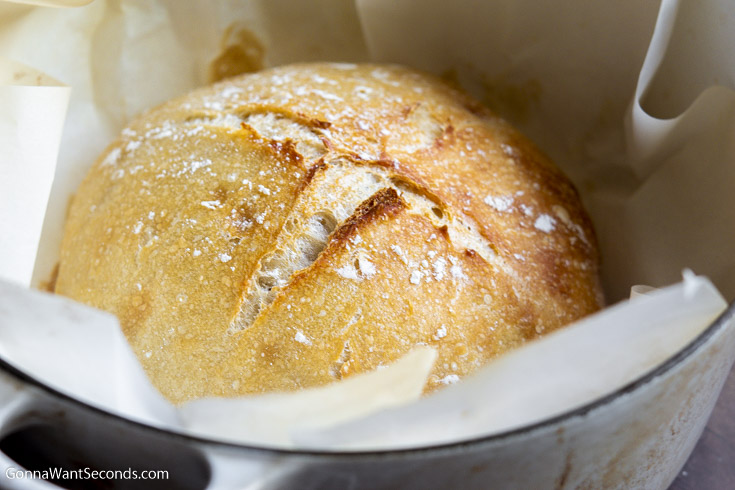
Score and bake: Preheat your oven to 425°F. Score the top of the dough with a sharp knife, place it in a Dutch oven, cover, and bake for 30 minutes. Remove the lid and continue baking until golden brown.
Cool completely: Transfer the bread to a wire rack and let it cool for at least 2–3 hours before slicing.
⭐ Pro Tips
⭐ Don’t add too much flour
This dough should be sticky—adding too much flour will make the bread dense instead of light and airy.
⭐ Preheat your Dutch oven if you want extra crust
A hot Dutch oven gives you even better oven spring and a crispier crust.
⭐ Check internal temperature
Bread is done at 205–210°F—this ensures the inside is fully baked without being gummy.
⭐ Let it cool fully
Cutting too early traps steam inside and can ruin the texture.
⚠️ Common Mistakes to Avoid
- Skipping the long rise → results in flat, bland bread
- Adding too much flour → creates a dense loaf
- Not baking long enough → leads to a gummy interior
- Cutting too soon → affects texture and structure
- Forgetting to remove the lid → prevents proper crust development
Storing + Reheating + Freezing + Make-Ahead Tips
Storing
Store bread at room temperature in a paper bag or loosely wrapped for up to 3 days. Avoid airtight containers—they soften the crust.
Reheating
Warm slices in a 300°F oven for 5–10 minutes to bring back that fresh-baked texture.
Freezing
Wrap tightly and freeze for up to 2 months. Thaw at room temperature before reheating.
Make-Ahead
You can mix the dough the night before and bake the next day—perfect for planning ahead.
◆ Frequently Asked Questions
◆ Do you have to use a Dutch oven?
No, but it gives the best results. You can use a heavy oven-safe pot with a lid or try baking with steam in the oven.
◆ Why is my bread dense?
Usually from adding too much flour or not letting the dough rise long enough.
◆ Why is my dough so sticky?
This is normal for high-hydration dough—resist the urge to add extra flour.
◆ Can I use active dry yeast?
Yes, but dissolve it in the liquid first before mixing.
◆ Can I make this without beer?
Absolutely—just replace it with additional water, though you’ll lose some flavor depth.
💗 If you still have questions, drop them in the comments—I’m always happy to help!
More Homemade Bread Recipes
- Sweet Potato Rolls — soft, slightly sweet, and perfect for fall or holiday meals
- Garlic and Herb Parker House Rolls — soft, buttery, and perfect for holidays
- Pull-Apart Garlic Bread — cheesy, shareable, and crowd-favorite
- Butter Swim Biscuits — rich, fluffy, and incredibly easy
- 7-Up Biscuits — light, tender, and pantry-friendly
- Bisquick Biscuits — classic, quick, and comforting
Tried This Recipe?
Hungry for more? Subscribe to my FREE newsletter! I share new recipes every week, plus a few tried-and-true favorites from the recipe box.
I’d love to hear what you think! Please leave a comment below and a star rating, and let me know how it turned out — or what fun variations you tried.
Tip for mobile readers: Scroll just a little farther to tap the stars. Thank you so much!
Thanks for stopping by my kitchen today — happy cooking, friends! ❤️ Kathleen
Secret Ingredient No-Knead Bread
Ingredients
- 3 cups all-purpose flour
- 1 1/2 teaspoons salt
- 1/4 teaspoon instant or rapid rise-yeast
- 3/4 cup water, at room temperature
- 1/2 cup beer (the secret ingredient!!)
- 1 tablespoon distilled white vinegar
Instructions
- In a large mixing bowl, stir together flour, salt, and yeast.
- In a 4 cup liquid measuring cup mix water, beer, and vinegar
- Gently fold the liquid mixture into the flour mixture, making sure to scrape down to the bottom of the bowl to get all the flour incorporated, until there is no dry flour and a dough begins to form.
- Cover the bowl completely with plastic wrap and allow to sit out at room temperature for 18 hours.
- Very lightly flour the counter and turn out dough. Fold the dough over a couple of times in flour. Pull the edges of the dough into the middle.
- Spread a 18X12 inch piece of parchment paper out on the counter and spray it with nonstick cooking spray. Transfer the shaped dough to the center of parchment. Carefully transfer to a Dutch oven (parchment will hang over edges of Dutch oven). Cover tightly with plastic wrap and allow to rise until dough has doubled in size, about 1 1/2-2 hours.
- Adjust an oven rack to the middle position. Remove plastic wrap. With a sharp knife make two 5 inch slashes, 1/4 inch deep, on the top of the dough to make a cross.
- Preheat oven to 425 degrees.
- Place the lid on the dutch oven, and bake in the preheated oven for 30 minutes.
- Remove the lid and bake 25-30 minutes or until an instant thermometer reads 205-210 degrees, and the crust is nicely golden brown.
- Remove the bread from the Dutch oven, discard parchment and allow bread to cool completely on a wire rack, about 3 hours.
Fans Also Made:


Nutrition
Slightly Adapted From : Bread Illustrated –My favorite bread baking cookbook BTW! The pretzels are also fantastic ♥



Oh wow, I felt like I was a professional baker after baking this. LOL. Diana approved!
Thank you so much, Diana! I’m so happy you enjoyed baking this 🙂
Do you preheat the dutch oven like other recipes? Would that affect baking times?
Hi Kris. Not in this recipe. You actually let the bread rise (the 2nd rise) in the Dutch oven.