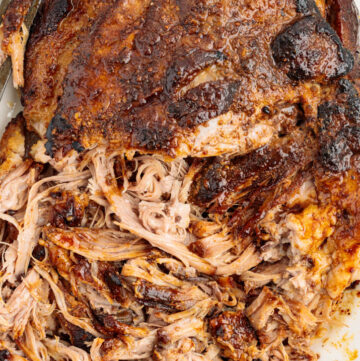
Oven Roasted Pork Butt Recipe
Learn how to cook pork butt in the oven until juicy, tender, and fall-apart perfect. This easy, no-fail method delivers incredible flavor.
Servings 8 servings
Calories 278kcal
Ingredients
For the Pork
- 3 - 4 pounds boneless pork butt
- 2 tablespoons olive oil
- 1/2 cup low-sodium chicken broth
- 2 teaspoons soy sauce
- 1 tablespoon apple cider vinegar, (optional, added at the end)
Dry Rub
- 2 tablespoons kosher salt
- 1 tablespoon black pepper
- 2 tablespoons smoked paprika
- 1 tablespoon brown sugar
- 2 teaspoons garlic powder
- 2 teaspoons onion powder
- 1 teaspoon dry mustard
- 1 teaspoon ground cumin
- 1/2 teaspoon cayenne or to taste
Instructions
- Prep the Pork: Pat the pork butt (3-4 pounds) dry with paper towels. Coat generously with the dry rub, pressing it into all surfaces.
- Rest: For the best flavor, wrap and refrigerate the seasoned meat for 4 to 24 hours. If short on time, let the seasoned pork sit at room temperature for 45–60 minutes before cooking.
- Preheat Oven: Preheat oven to 300°F (149ºC).
- Bring To Temp: Allow the pork to sit at room temperature while the oven heats.
- Sear: Heat the olive oil (2 tablespoons) in a large Dutch oven over medium to medium-high heat. Sear the pork on all sides until deeply browned, about 2–4 minutes per side.Don’t rush this step — the browning creates the foundation for the flavor of your pan juices. If the rub begins to darken too quickly, lower the heat slightly.
- Add Liquid: Pour 1/2 cup of broth into the pot to deglaze, scraping up browned bits. Stir in 2 teaspoons soy sauce, then continue scraping until everything is fully loosened. The liquid should not cover the pork — you’re creating a moist cooking environment, not boiling it.
- Slow Cook: Cover and transfer to the oven. Cook for about 3–4 hours covered, then uncover and continue cooking for 30–60 minutes, until the exterior deepens in color and the pork is fork-tender. It’s ready when the internal temperature reaches 195–205°F, a fork twists easily, and a probe slides in with little resistance.
- Rest & Reduce Pan Juices: Remove the pork and let it rest for 20–30 minutes.Meanwhile, place the pot over medium heat and simmer the pan juices until reduced by about half. Stir in the apple cider vinegar (1 tablespoon), if using. The sauce should become glossy, slightly thickened, and deeply flavorful. Taste and adjust seasoning as needed.
- Shred the pork: Use two forks to shred the roast then toss with some of the cooking juices. Add more juices as needed to keep the pork moist.
Notes
- Use a steady oven temperature (around 300°F): Keeping the temperature consistent helps the collagen slowly melt into gelatin, which gives pork butt its signature tender, juicy texture.
- Use a thermometer for precision: Instead of guessing, check for doneness around 195–205°F. This ensures the pork is fully tender, not just cooked through.
- Build flavor with a generous rub: Because pork butt is so large, a well-seasoned exterior creates layers of flavor that carry through once the meat is shredded.
- Let it rest before shredding: Resting gives the juices time to settle back into the meat, making it noticeably juicier and easier to pull apart.
- Don’t skip the pan juices: Those rich cooking juices at the bottom of the pan are packed with flavor. Spoon them over the shredded pork to keep it extra moist and delicious.
Nutrition
Serving: 1serving | Calories: 278kcal | Carbohydrates: 4g | Protein: 33g | Fat: 14g | Saturated Fat: 4g | Polyunsaturated Fat: 2g | Monounsaturated Fat: 7g | Cholesterol: 102mg | Sodium: 1946mg | Potassium: 669mg | Sugar: 2g | Vitamin A: 921IU | Vitamin C: 0.3mg | Calcium: 40mg | Iron: 3mg