
This post may contain affiliate links. Please read our disclosure policy.
Chicken thighs are dark-meat chicken known for staying juicy, tender, and flavorful across a wide range of cooking methods. Whether you’re working with bone-in or boneless, skin-on or skinless, chicken thighs soak up flavor beautifully and give you far more wiggle room than chicken breasts.
Because thighs have a little more fat and connective tissue, they stay tender through roasting, braising, slow cooking, and even high-heat methods like air frying. When cooked properly, they’re deeply savory, moist, and incredibly satisfying.
If you’ve ever worried about dry chicken, overcooking, or hitting the exact temperature at the exact second — chicken thighs are your answer.
🍗 At a Glance: How to Cook Chicken Thighs
- Best oven temp: 400–425°F
- Cook time:
Bone-in: 35–45 minutes
Boneless: 25–30 minutes - Internal temp:
Minimum: 165°F
Best: 175–190°F - Best method: Oven roasted (crispy skin)
👉 Want perfectly seasoned, crispy chicken thighs every time? The full step-by-step method (plus my best seasoning blend) is just below.
If you want the easiest, most reliable method, start with the oven-roasted chicken thighs below—then use the other methods depending on what you’re making.
Why This Guide Matters
Chicken thighs are one of the most forgiving, flavorful, and budget-friendly cuts of chicken—but they’re also one of the most misunderstood.
Cook them too low and the skin never crisps.
Pull them at 165°F and they can taste slightly tight or chewy.
Use the wrong method for the cut (bone-in vs. boneless), and the texture suffers.
This guide takes the guesswork out.
Instead of vague advice, you’ll find:
- The right temperatures for bone-in vs. boneless thighs
- When to cook to 165°F—and when to go higher
- Why dark meat gets more tender at 175–195°F
- How to choose the best method for the result you want
🌡 Chicken Thigh Temperature & Method Cheat Sheet
Here’s a quick-reference table you can screenshot or bookmark:
| Type of Thigh | Best Oven Temp | Pull Temp | Why It Works |
|---|---|---|---|
| Bone-In, Skin-On | 400–425°F | 175–190°F | Higher heat crisps the skin; dark meat becomes more tender above 175°F |
| Bone-In, Skinless | 375–400°F | 175–185°F | Gentle enough to stay juicy, hot enough to develop flavor |
| Boneless, Skinless | 400°F | 170–180°F | Cooks quickly; slight carryover heat keeps it tender |
| Braising / Saucy Dishes | 325–350°F (covered) | 185–195°F | Collagen breaks down at higher temps, creating fork-tender texture |
| Slow Cooker | Low 4–6 hrs | 190°F+ | Ideal for shredding; thighs stay moist even when fully tender |
🔥 Why 165°F Isn’t Always the Goal
Yes, 165°F is the USDA minimum safe temperature—but chicken thighs are dark meat, which means they contain more connective tissue.
That collagen needs higher heat to break down properly.
At:
- 165°F → Safe, but can feel slightly tight
- 175–185°F → Juicier, more tender
- 190°F+ → Fall-apart shreddable
This is why restaurant chicken thighs often taste better—they’re cooked a little longer, not less.
✨ Before You Begin
A few quick things to know before you start cooking chicken thighs—these small details make a big difference:
✨ Bone-in vs boneless matters. Bone-in thighs take longer but stay juicier; boneless cook faster.
✨ Skin-on adds flavor. The skin renders fat and protects the meat, especially in the oven.
✨ Thighs like higher temperatures. Unlike breasts, thighs benefit from cooking past 165°F.
✨ Resting still matters. Let thighs rest 5–10 minutes so the juices redistribute.
Why Chicken Thighs Are So Forgiving
Chicken thighs contain more intramuscular fat and collagen than chicken breasts. As they cook, that collagen breaks down into gelatin, which keeps the meat juicy and tender—even if you cook them a little longer than planned.
This is why thighs:
- Don’t dry out easily
- Taste better reheated
- Work beautifully in sauces and gravies
- Hold up to long cooking times
🥣 How to Cook Chicken Thighs
There isn’t just one “right” way to cook chicken thighs — that’s part of what makes them so useful. Here’s how the most common methods work.
How to Cook Chicken Thighs in the Oven (Best Method)
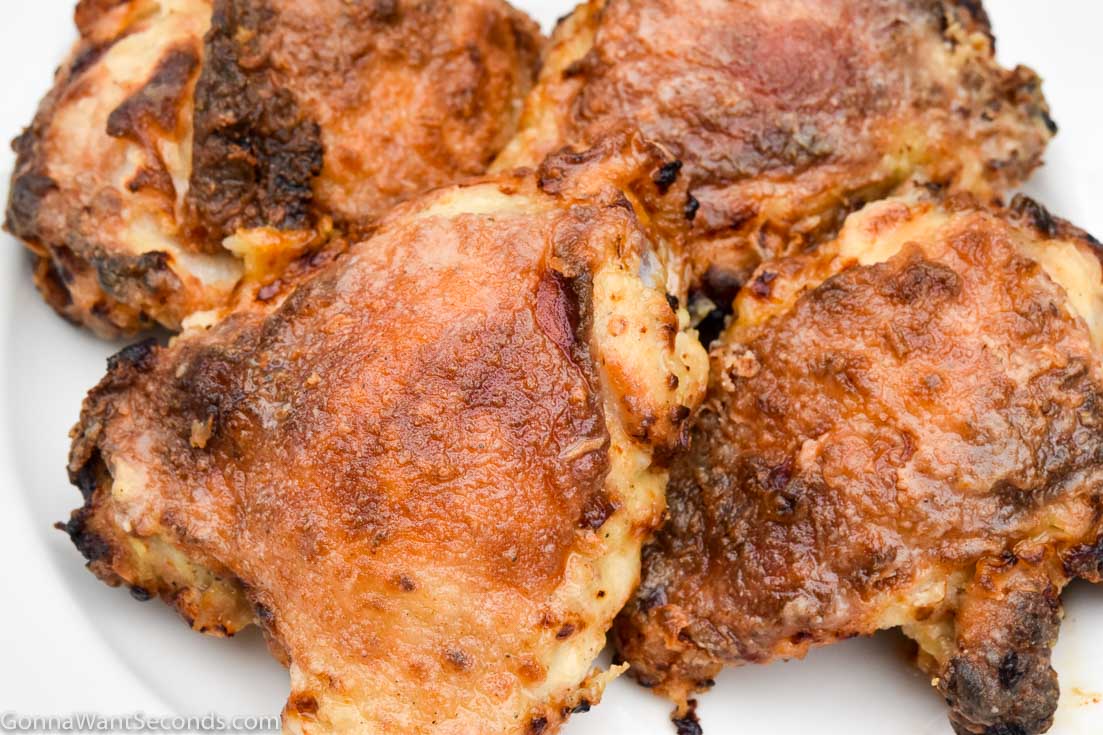
If you want juicy chicken thighs with crispy skin and deep flavor, the oven is hands-down the most reliable method. This is the one I come back to again and again—it’s simple, consistent, and gives you that perfect balance of crisp outside and tender, flavorful meat inside.
The key is using high heat and giving the skin time to render properly. Once you do this a couple of times, you won’t even need to think about it.
Prep.
Preheat your oven to 400–425°F and line a baking sheet with foil or parchment for easy cleanup. Pat the chicken thighs very dry with paper towels—this is what helps the skin crisp instead of steam.
Season.
Rub the thighs with a little olive oil, then season generously with salt, pepper, and your favorite spices. If you’re using skin-on thighs, make sure the skin is evenly coated—it helps it turn golden and crisp in the oven.
Arrange.
Place the thighs skin-side up on the baking sheet, leaving space between each piece. Crowding the pan traps steam and prevents browning.
Bake.
Roast uncovered for:
- 35–45 minutes for bone-in thighs
- 25–30 minutes for boneless thighs
The skin should be golden and crisp, and the internal temperature should reach 175–190°F for the best texture.
Rest.
Let the chicken rest for 5–10 minutes before serving so the juices settle back into the meat. This keeps every bite tender and flavorful.
This is the same approach I use in recipes like Oven Baked BBQ Chicken Thighs and Greek Lemon Chicken and Potatoes, where the thighs roast until deeply flavorful and tender.

⏱ How Long to Cook Chicken Thighs
Cook time for chicken thighs depends on the method, temperature, and whether they’re bone-in or boneless. Here’s a quick, reliable guide you can use every time.
At a glance:
- 400–425°F (oven)
Bone-in: 35–45 minutes
Boneless: 25–30 minutes - 375°F (oven)
Bone-in: 40–50 minutes
Boneless: 30–35 minutes - 350°F (oven)
Bone-in: 50–60 minutes
Boneless: 35–45 minutes - Air fryer (375–400°F)
Bone-in: 18–25 minutes
Boneless: 12–18 minutes - Slow cooker (low)
Bone-in or boneless: 4–6 hours
Important: For the best texture, cook chicken thighs to 175–190°F for bone-in and 170–180°F for boneless.
🔥 How to Get Crispy Chicken Thighs
Crispy skin is all about one thing: removing moisture and rendering fat properly. Once you understand that, it becomes easy to get golden, crackly skin every time.
⭐ Start with dry skin
Pat the chicken thighs very dry with paper towels before seasoning. Moisture is the enemy of crisping—if the skin is wet, it will steam instead of brown.
⭐ Use high heat
Chicken thighs need higher heat than chicken breasts to crisp properly. Roast at 400–425°F so the fat under the skin can render while the outside turns golden and crisp.
⭐ Cook skin-side up, uncovered
Always place thighs skin-side up and cook them uncovered. Covering traps steam and softens the skin instead of crisping it.
⭐ Give them space
Don’t crowd the pan. Air needs to circulate around each piece so the skin can brown. If they’re too close together, they’ll steam instead.
⭐ Use a rack (for best results)
For extra-crispy skin, place the thighs on a wire rack set over a baking sheet. This allows hot air to circulate underneath, helping the skin crisp all the way around.
⭐ Let the fat do the work
Chicken thighs naturally contain enough fat to crisp beautifully. You only need a light coating of oil—too much can actually make the skin greasy instead of crisp.
⭐ Finish with a quick broil (optional)
If the skin isn’t quite as crisp as you’d like, broil for 2–3 minutes at the end. Watch closely so it doesn’t burn.
Braised & Sauce‑Based Chicken Thighs
Chicken thighs shine in dishes where they simmer gently in liquid or sauce.
The key is to cook them at a gentle simmer, not a hard boil. Over time, the connective tissue breaks down, leaving the meat incredibly tender.
This method is exactly why dishes like Chicken Paprikash, Chicken Scarpariello, and Shoyu Chicken are so rich and comforting — the thighs absorb flavor while staying moist.
Slow Cooker Chicken Thighs
Thighs are ideal for the slow cooker because they don’t fall apart or dry out during long cooking times.
Use enough sauce to coat the chicken, but not so much that it becomes watery. Toward the end, you can remove the lid to thicken the sauce if needed.
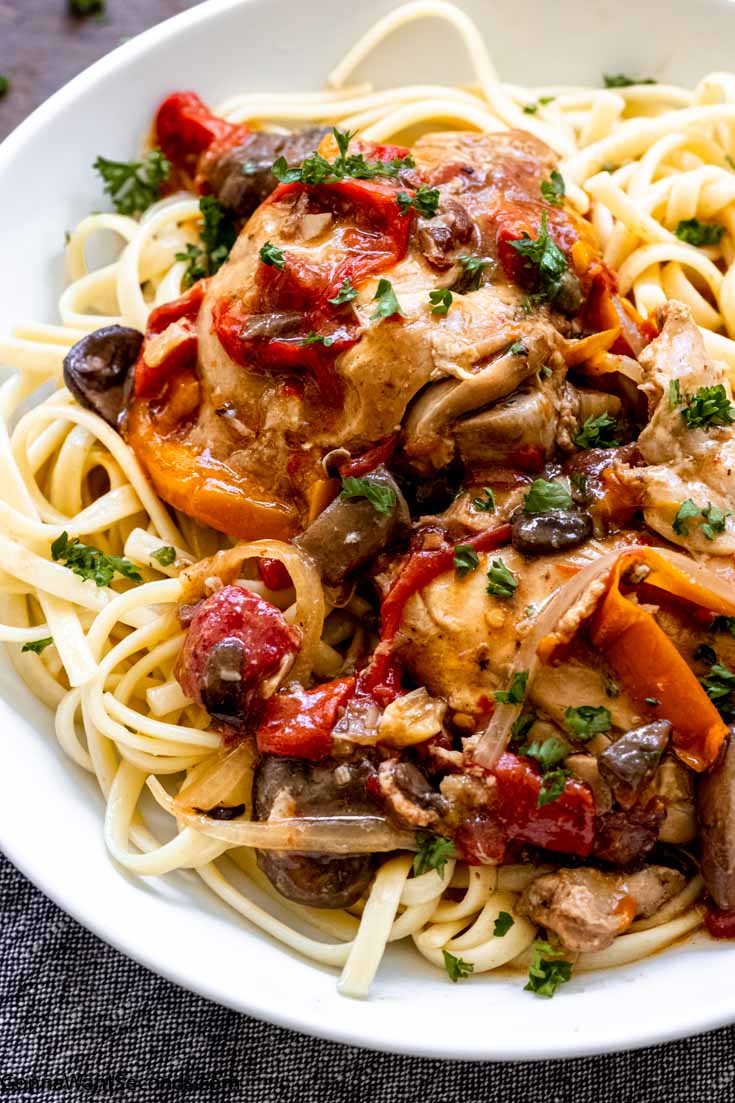
Recipes like Sweet Hawaiian Crockpot Chicken, Crockpot Brown Sugar Chicken, and Slow Cooker Chicken Cacciatore rely on this forgiving cut for consistent results.
High‑Heat Methods (Air Fryer & Skillet)
Chicken thighs can also handle higher heat surprisingly well.
In the air fryer or a hot skillet, thighs stay juicy inside while developing a deeply browned exterior. This is why they work so well in recipes like Air Fryer Fried Chicken, Honey Garlic Chicken, and Hibachi Chicken.
The key is spacing — give them room so they brown instead of steam.
How to Tell When Chicken Thighs Are Done
Chicken thighs are safe to eat at 165°F, but unlike chicken breasts, they actually taste better cooked a bit longer.
Ideal internal temperature:
- 175–190°F for bone‑in thighs
- 170–180°F for boneless thighs
Visual cues matter just as much as temperature:
- Juices run clear
- Meat pulls easily from the bone
- Texture is tender, not springy
If you’re ever unsure, it’s better to let thighs cook a few extra minutes — they won’t punish you for it.
Can You Substitute Chicken Thighs for Breasts?
Yes — in many recipes, chicken thighs are actually an upgrade.
Thighs work especially well in:
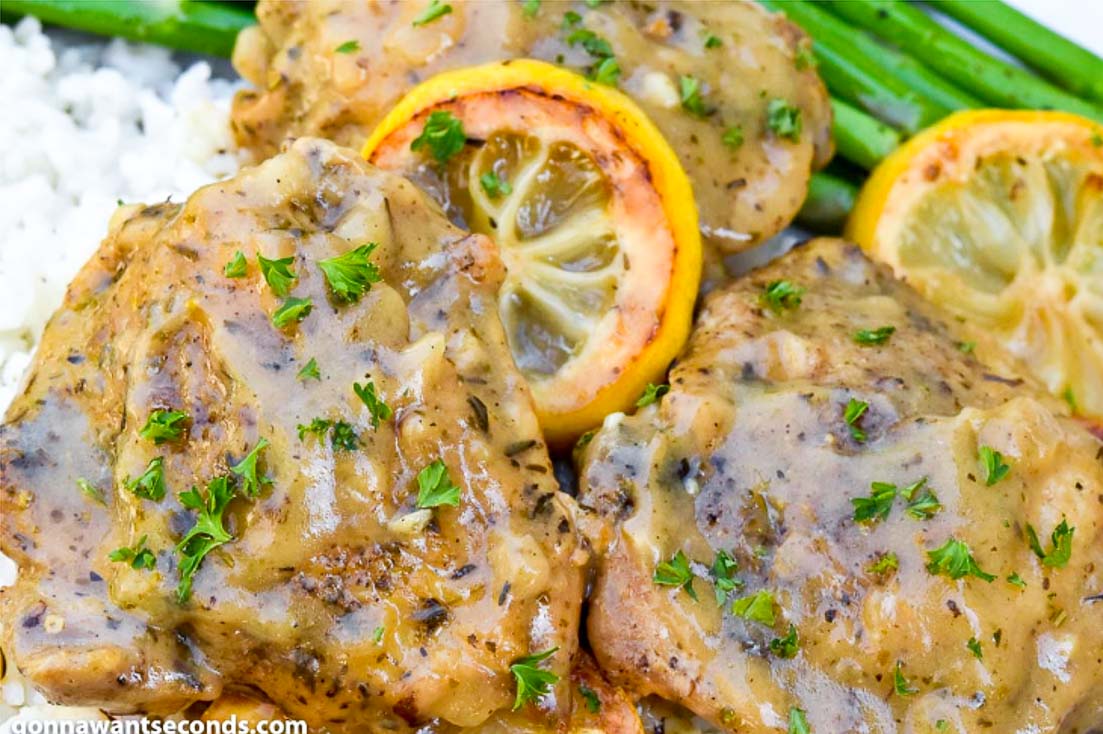
- Creamy or gravy‑based dishes
- Casseroles
- Slow‑cooked recipes
- Saucy skillet meals
For example, while Creamed Chicken Over Biscuits uses chicken breast, thighs can be used for a richer, juicier result. The main adjustment is allowing a slightly longer cook time.
Where thighs don’t work as well is in very thin, fast‑cooking cutlet recipes that rely on white‑meat texture.
What About Chicken Leg Quarters?
Chicken leg quarters include the thigh and drumstick together, so the thigh portion follows the same cooking rules.
The only difference is that the drumstick may need a few extra minutes to fully cook. Oven temperatures and doneness cues stay the same.
This is why recipes like Baked Chicken Leg Quarters still benefit from everything you know about cooking chicken thighs.
⭐ Pro Tips for Cooking Chicken Thighs
⭐ Don’t fear higher temperatures
Chicken thighs are happier at higher heat than breasts. Roasting at 400–425°F gives you better flavor and texture.
⭐ Skin‑on means uncovered
If the thighs have skin, cook them uncovered so the fat renders properly and the skin crisps.
⭐ Sauce protects the meat
In braised or creamy dishes, sauce acts as insulation, keeping thighs moist even with longer cook times.
⭐ Rest before serving
Let thighs rest a few minutes before serving so the juices stay in the meat instead of running out onto the plate.
What to Cook Next With Chicken Thighs
If you’re ready to put this into practice, these recipes are great places to start:
- Chicken Paprikash
- Chicken Scarpariello
- Sweet Hawaiian Crockpot Chicken
- Oven Baked BBQ Chicken Thighs
- Greek Lemon Chicken and Potatoes
Tried This Guide?
💗 If this guide helped you feel more confident cooking chicken thighs, please take a moment to leave a comment or star rating — I love hearing from you!
Tip for mobile readers: scroll just a bit to tap the stars — thank you!
Thanks for stopping by my kitchen today — happy cooking, friends! 💗 Kathleen



Very informative- Thanks for your in-depth explanation.
You’re so welcome, Janet. I hope it helps with all chicken thigh questions!