

This post may contain affiliate links. Please read our disclosure policy.
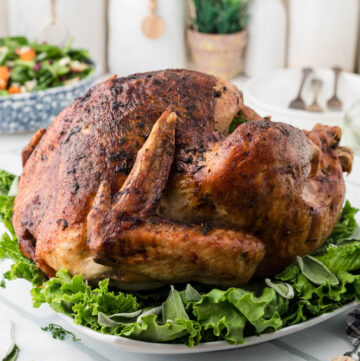
Every Thanksgiving deserves a turkey that’s beautifully browned, perfectly juicy, and surrounded by rich homemade gravy—and this is the recipe I’ve been making for my own family for more than 25 years. Over the years, I’ve simplified the process without sacrificing a bit of flavor, keeping the techniques that truly make a difference while leaving behind the unnecessary fuss. Whether you’re roasting your very first turkey or hosting Thanksgiving for the twentieth time, this step-by-step recipe will help you serve a tender, flavorful turkey and silky homemade gravy with confidence.
This roast turkey is brined for exceptional juiciness, coated with a savory garlic herb butter, and roasted until the meat is perfectly tender and the skin is beautifully golden. Along the way, you’ll make a simple homemade turkey broth that pulls double duty—creating incredible pan drippings for basting and the rich, flavorful base for the best Thanksgiving gravy.
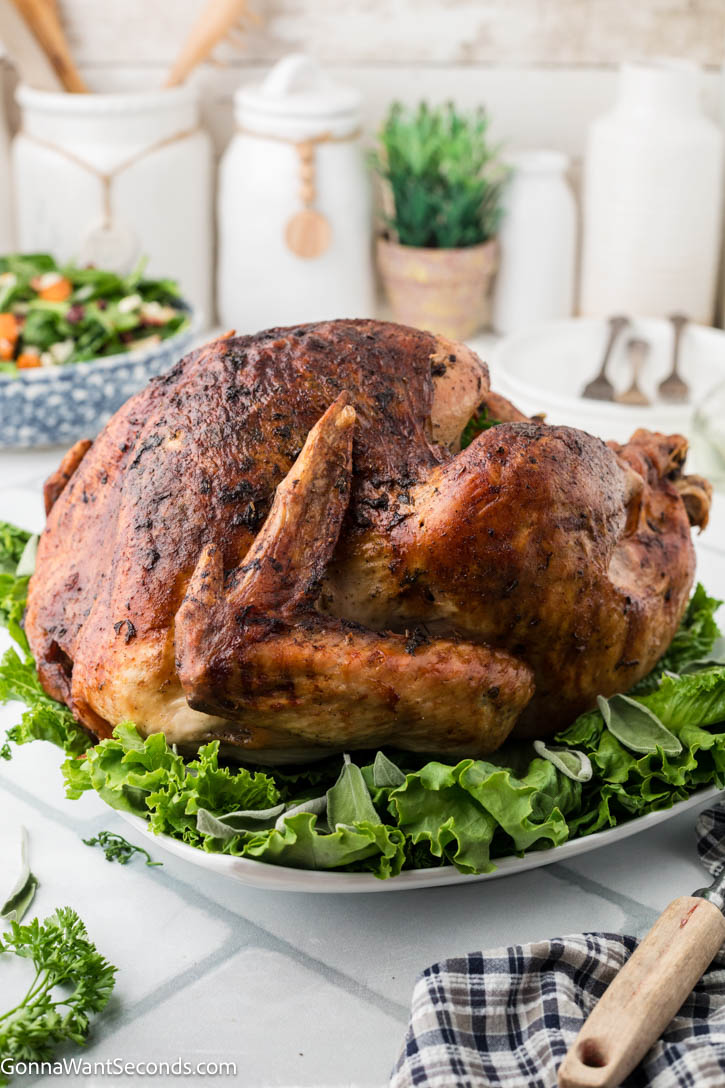
✨ Before You Begin
✨ Plan ahead for the brine. This recipe starts with a wet brine, so you’ll want to begin the day before Thanksgiving. Brining seasons the turkey all the way through and helps keep the meat exceptionally juicy.
✨ Give the turkey time to drain. After removing the turkey from the brine, let it rest on a roasting rack for about an hour before seasoning. This allows excess liquid to drain from the cavity so you can pat the bird completely dry for better browning.
✨ Don’t worry if everything won’t fit. The turkey cavity doesn’t need to hold every piece of onion, carrot, celery, and herbs. Fill it with as much as comfortably fits, then scatter the remaining aromatics in the roasting pan to flavor the drippings.
✨ Keep an eye on the roasting pan. As the turkey roasts, the liquid in the pan may reduce. If it begins to evaporate too much, simply add a little more reserved turkey broth to prevent the drippings from scorching and keep plenty of flavorful pan juices for the gravy.
✨ Trust your thermometer, not the clock. Roasting times are only estimates because every turkey and every oven is different. An instant-read thermometer is the most reliable way to know exactly when your turkey is perfectly cooked.
Roasted Turkey Ingredients + Key Notes
A few simple ingredients come together to create a beautifully browned, juicy turkey and rich homemade gravy. Here’s what makes each one important:
Turkey: A 12- to 15-pound turkey is the ideal size for even cooking and gives you plenty of flavorful pan drippings for homemade gravy. If your turkey is frozen, allow several days to thaw completely in the refrigerator before brining.
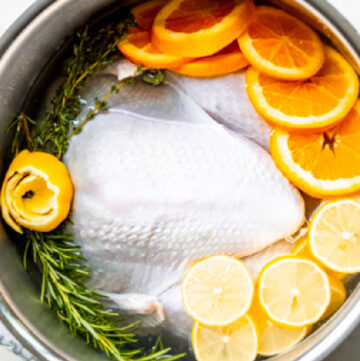
Turkey Brine: A wet brine seasons the turkey all the way through, helping it stay tender, juicy, and flavorful while also giving you a little extra insurance against overcooking.
Turkey Broth: Homemade turkey broth is one of the secrets to this recipe. Made with the turkey neck, giblets, vegetables, and herbs, it adds incredible depth to the gravy and provides flavorful liquid for the roasting pan if it begins to dry during roasting.
Butter: Softened butter carries all of the herbs and seasonings while helping the turkey develop beautifully golden, crisp skin. Sliding some of the butter beneath the skin also flavors the breast meat as it roasts.
Garlic, Poultry Seasoning & Fresh Parsley: These simple seasonings complement the turkey without overpowering its natural flavor, creating a classic herb butter that’s perfect for Thanksgiving.
Orange: Tucked into the cavity, the orange gently perfumes the turkey and pan drippings with a subtle citrus aroma. It won’t make the finished turkey taste fruity—it simply adds another layer of flavor.
Onion, Carrot, Celery & Fresh Herbs: These aromatics flavor both the turkey and the pan drippings. Don’t worry if everything doesn’t fit inside the cavity—any remaining vegetables go into the roasting pan, where they’ll continue building flavor for the gravy.
Dry White Wine: A splash of dry white wine deglazes the roasting pan, lifting all those flavorful browned bits from the bottom and adding brightness and complexity to the gravy.
Flour & Butter: Together they create a simple roux, giving the gravy a silky, velvety texture without lumps.
🔬 The Turkey Science
A few simple techniques make all the difference between an average turkey and one that’s juicy, flavorful, and worthy of the Thanksgiving table.
Brining locks in moisture. A saltwater brine seasons the turkey all the way through while helping it retain more moisture during roasting. The result is tender, juicy meat that’s much more forgiving if the turkey cooks a few minutes longer than planned.
Butter does more than add flavor. Spreading seasoned butter under the skin flavors the breast meat as it roasts, while butter on the outside helps the skin turn beautifully golden and crisp.
Aromatics build flavor from the inside out. The onion, carrot, celery, herbs, and orange gently perfume the turkey as it roasts, while any vegetables left in the roasting pan enrich the drippings that become your homemade gravy.
Resting is the final secret. Letting the turkey rest before carving gives the juices time to redistribute throughout the meat instead of running onto the cutting board, so every slice stays moist and flavorful.
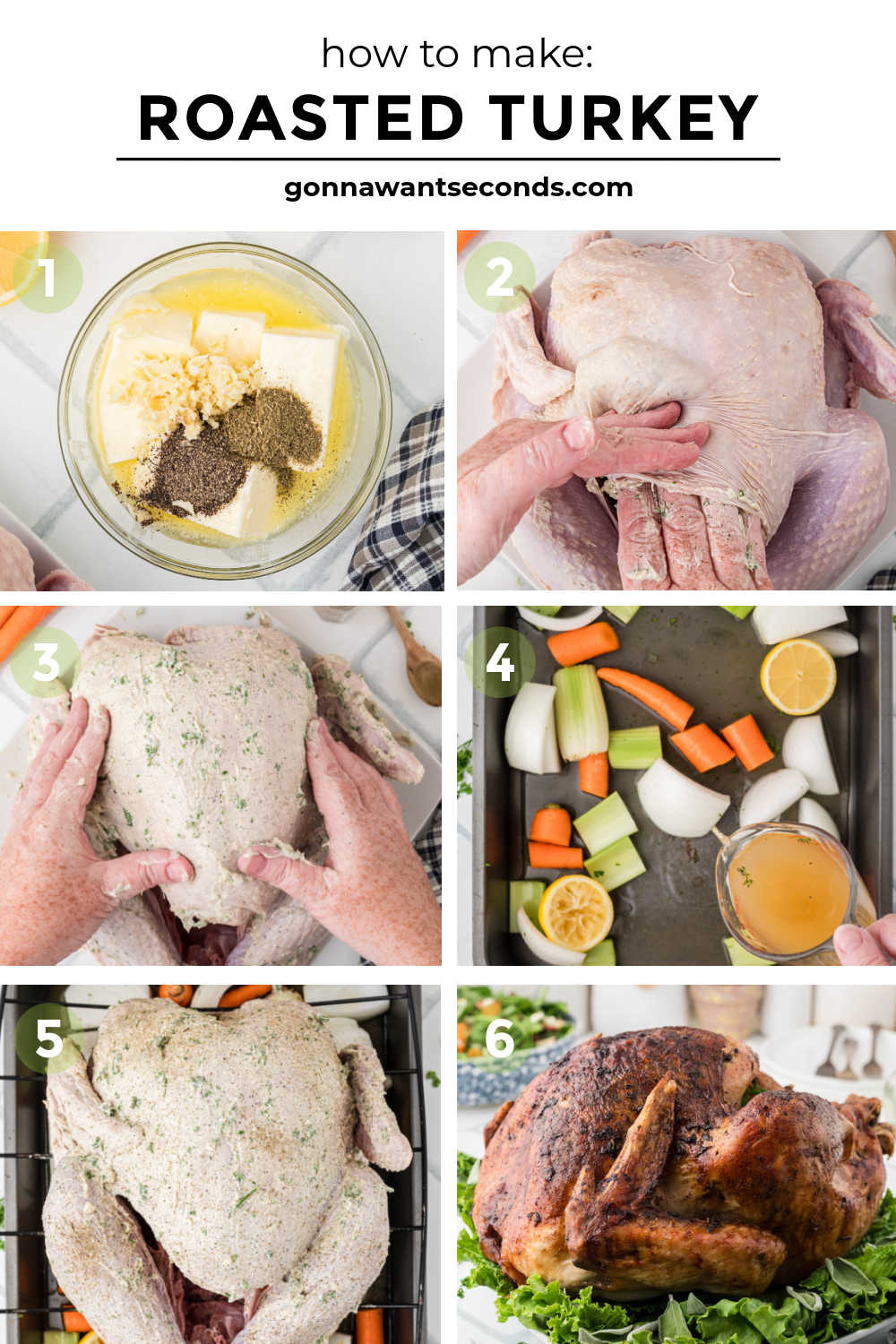
🍗 How to Make Roast Turkey
Roasting a turkey is easier than you might think. This recipe builds flavor every step of the way, from the overnight brine and homemade turkey broth to the garlic herb butter and rich pan drippings that become the best homemade gravy.
Brine the turkey.
Brining seasons the turkey all the way through while helping it stay juicy during roasting. After removing it from the brine, let it drain for about an hour before patting it dry again so the butter adheres well and the skin browns beautifully.
Make the turkey broth.
Simmer the turkey neck and giblets with vegetables, herbs, broth, and water to create a flavorful homemade turkey broth. It enriches the roasting pan, prevents the drippings from scorching if needed, and becomes the base of the gravy.
Butter and roast.
Spread the garlic herb butter under the skin and over the outside of the turkey, then fill the cavity with the orange and as many aromatics as comfortably fit. Roast uncovered, tenting the breast or drumsticks with foil only if they begin to brown too quickly. Trust your thermometer—not the clock—to tell you when the turkey is done.
Rest and make the gravy.
Let the turkey rest for 30 to 45 minutes before carving so the juices stay in the meat where they belong. While it rests, deglaze the roasting pan and combine the flavorful drippings with the homemade broth and a simple roux for a rich, silky gravy.
⭐ Pro Tips for the Juiciest Turkey Ever
⭐ Make the turkey broth ahead of time. The homemade broth can be made a day or two in advance, making Thanksgiving Day much less hectic while still giving you rich, flavorful gravy.
⭐ Pat the turkey completely dry. After the turkey has drained from the brine, pat it dry one last time just before adding the butter. A dry surface helps the skin brown more evenly.
⭐ Don’t overstuff the cavity. Fill it with as many aromatics as comfortably fit, then add the rest to the roasting pan. A loosely filled cavity allows better air circulation while the remaining vegetables continue flavoring the pan drippings.
⭐ Baste with the pan drippings. Those buttery, flavorful drippings are the best basting liquid you could ask for. If the liquid in the roasting pan begins to evaporate too much, simply add a little more reserved turkey broth.
⭐ Trust your thermometer. Start checking the turkey a little before the estimated cooking time. Every turkey roasts differently, but an instant-read thermometer will tell you exactly when it’s perfectly cooked.
⭐ Let it rest before carving. Giving the turkey 30 to 45 minutes to rest keeps the juices in the meat instead of on the cutting board, making every slice more tender and flavorful.
What to Serve With Roast Turkey
A beautifully roasted turkey deserves equally memorable side dishes. These Thanksgiving favorites pair perfectly with juicy turkey and rich homemade gravy.
Creamy Mashed Potatoes – Light, fluffy, and buttery, these classic mashed potatoes are made for soaking up every spoonful of homemade turkey gravy.
Sausage Stuffing – Savory, herb-seasoned stuffing with hearty sausage adds incredible flavor and is a delicious Thanksgiving classic alongside roasted turkey.
Classic Cranberry Sauce – Sweet, tart cranberry sauce adds a bright, refreshing contrast to the rich turkey and gravy.
Creamed Spinach – Rich, creamy, and perfectly seasoned, this steakhouse favorite adds a touch of elegance to your Thanksgiving table while pairing beautifully with roasted turkey.
Quick Dinner Rolls – Soft, fluffy, and ready in less time than traditional yeast rolls, these homemade rolls are perfect for soaking up every last drop of turkey gravy.
Pumpkin Pie – Finish your Thanksgiving feast with a slice of silky pumpkin pie topped with a generous dollop of whipped cream.
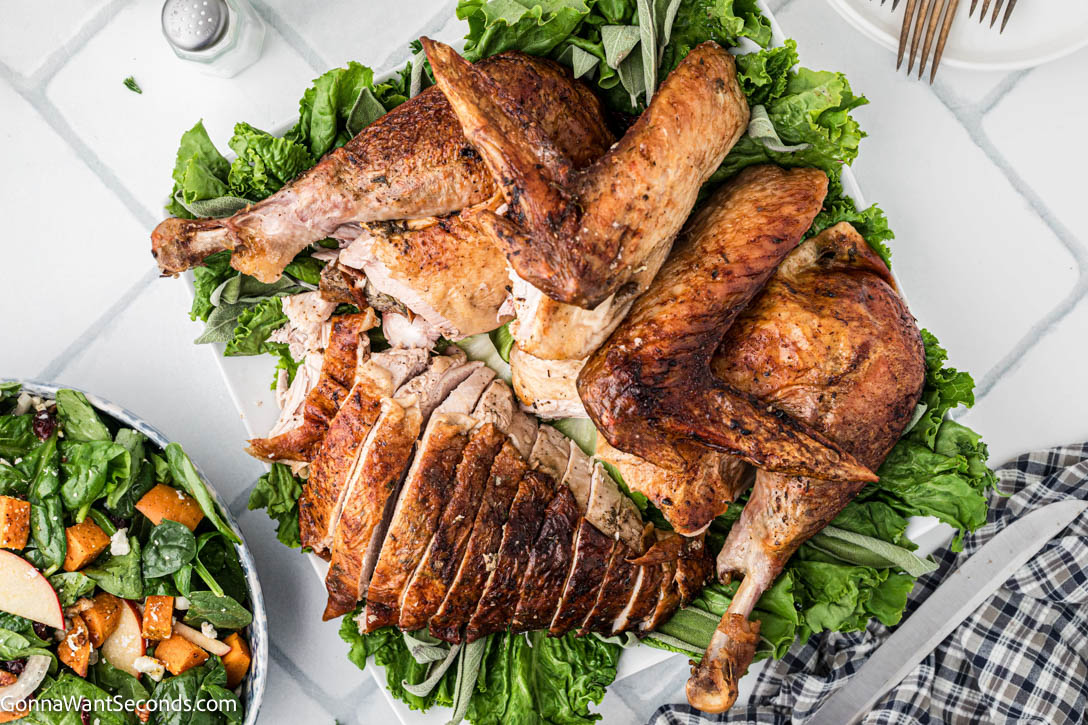
Storing + Freezing + Reheating
Store: Allow the turkey to cool completely, then carve and transfer the meat to an airtight container. Refrigerate for up to 4 days. Store the gravy separately in an airtight container.
Freeze: Slice or shred the turkey and freeze it in freezer-safe containers or zip-top bags for up to 3 months. For the best texture, add a little turkey broth before freezing to help keep the meat moist. Freeze the gravy separately.
Reheat: Place the turkey in a baking dish with a splash of turkey broth or chicken broth, cover tightly with foil, and warm in a 325°F oven until heated through. Individual portions can also be reheated gently in the microwave. Reheat the gravy in a saucepan over medium-low heat, whisking occasionally, until hot.
Don’t let those leftovers go to waste! Leftover turkey is perfect for soups, sandwiches, casseroles, pot pie, pinwheels, and turkey à la king.
❓ Frequently Asked Questions
◆ How long does it take to roast a turkey?
Roasting time depends on the size of your turkey and your oven, so use the suggested cooking time as a guide rather than a guarantee. A 14- to 16-pound turkey typically takes about 2¾ to 3 hours at 325°F, but the turkey is done only when an instant-read thermometer registers 165°F in the thickest part of the thigh and 160°F in the thickest part of the breast.
◆ Do I have to brine the turkey?
No, but I highly recommend it. Brining seasons the turkey all the way through and helps it stay juicy during roasting, making it much more forgiving if it cooks a little longer than expected.
◆ Do I need to baste the turkey?
Basting is optional, but I like to baste the turkey once or twice with the flavorful pan drippings during roasting. There’s no need to open the oven constantly—once or twice is plenty.
◆ Why won’t all of the vegetables fit inside the turkey?
That’s completely normal. Fill the cavity with as many of the aromatics as comfortably fit, then scatter the rest in the roasting pan. They’ll continue flavoring the drippings, making your homemade gravy even more delicious.
◆ Can I make the turkey broth ahead of time?
Absolutely! In fact, I recommend it. The turkey broth can be made 1 to 2 days ahead, cooled, and refrigerated until you’re ready to roast the turkey. It’s a great way to lighten your Thanksgiving Day workload.
◆ How do I know when the turkey is done?
The most reliable way is with an instant-read thermometer. The turkey is ready when the thickest part of the thigh reaches 165°F and the thickest part of the breast reaches 160°F. As the turkey rests, the breast will continue to rise a few degrees while the juices redistribute.
◆ Can I make the gravy ahead of time?
Yes. The gravy can be made a day ahead and refrigerated in an airtight container. Reheat it gently over medium-low heat, whisking occasionally. If it thickens too much, whisk in a splash of turkey or chicken broth until it reaches your desired consistency.
◆ Can I freeze leftover turkey?
Yes! Carve or shred the cooled turkey and freeze it in airtight containers or freezer bags for up to 3 months. For the best texture, add a little turkey broth before freezing to help keep the meat moist.
Still have questions? Leave a comment below—I’m always happy to help make your Thanksgiving dinner a success! 💗
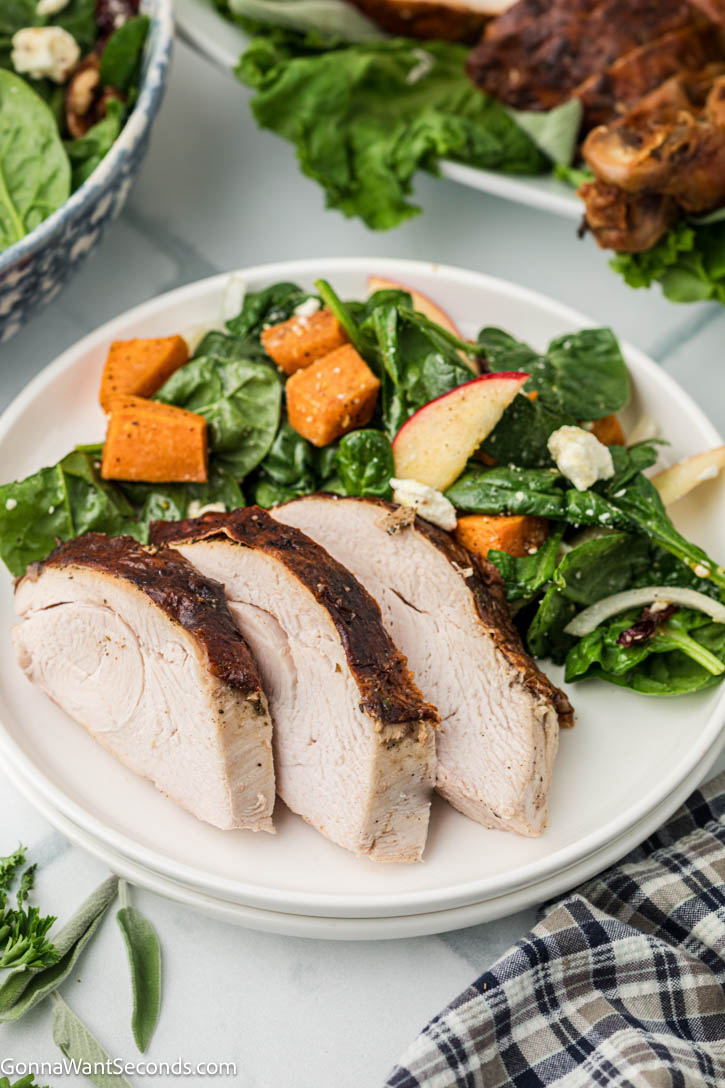
🦃 Leftover Turkey Recipes You’ll Love
Don’t let a single bite of leftover turkey go to waste! These family-favorite recipes are the perfect way to enjoy every last bit of your Thanksgiving turkey.
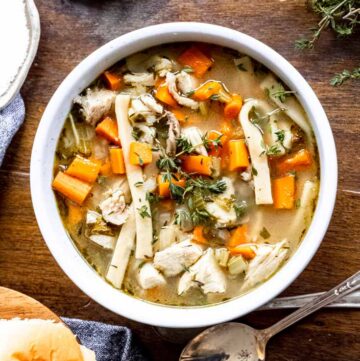
Turkey Carcass Soup – Make the most of your Thanksgiving turkey by turning the carcass into a rich, homemade soup that’s loaded with vegetables, noodles, and incredible flavor.
Leftover Turkey Soup – A hearty, comforting soup filled with tender turkey, vegetables, and savory broth that’s perfect for chilly days after Thanksgiving.
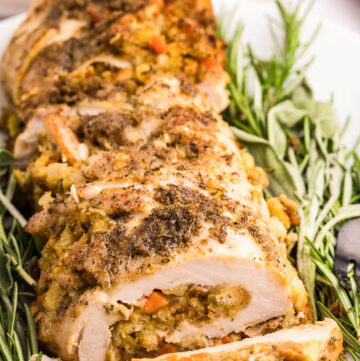
Turkey Pinwheels – These easy pinwheels are made with leftover turkey or deli turkey, creamy cheese, and flavorful seasonings for a quick lunch, snack, or holiday appetizer.
Turkey à la King – Tender turkey in a rich, creamy mushroom sauce served over toast, rice, biscuits, or puff pastry for the ultimate comfort food dinner.
Turkey Pot Pie – Flaky, golden pastry surrounds a creamy filling packed with tender turkey and vegetables, making this one of the best ways to transform Thanksgiving leftovers into a whole new meal.
Tried This Recipe?
💌 And while you’re here, don’t miss the next cozy recipe — subscribe to my totally FREE newsletter so you’ll always have comfort food favorites at your fingertips. 💌
If you enjoyed this recipe, please take a moment to leave ⭐️⭐️⭐️⭐️⭐️ star rating and a quick comment — I love hearing from you and it helps our community of bakers and cooks!
📸 And if you Gram… don’t forget to share your photo on Instagram — tag me @gonnawantseconds so I can cheer you on and share your creations!
Thanks for stopping by my kitchen today — happy cooking, friends! 💗 Kathleen
Roast Turkey Recipe
Ingredients
Brine Turkey (Up to 24 Hours Ahead)
Turkey Broth
- 2 tablespoons neutral vegetable oil
- reserved turkey neck and giblets
- 1 large onion, ccoarsely chopped
- 1 large carrot, cut into 1-inch pieces
- 1 stalk celery, cut into 1-inch pieces
- 1 dried bay leaf
- 2 sprigs fresh thyme
- 4 sprigs fresh parsley
- 3 cups chicken or turkey broth
- 3 cups water
Compound Butter
- 2 tablespoons lemon juice, freshly squeezed
- 12 tablespoons butter salted and room temperature
- 4 cloves garlic minced
- 1 teaspoon poultry seasoning
- 2 tablespoons parsley freshly chopped
- 1 teaspoon black pepper divided
Turkey
- 1 whole turkey, giblets removed (approx 12-15 pounds)
- 1 large onion, quartered
- 1 large carrot, cut into 1-inch pieces
- 1 large stalk celery, cut into 1-inch pieces
- 1 large orange, cut into 8ths
- 2 sprigs fresh thyme
- 2 bay leaves
- 1 1/2 to 2 cups reserved turkey broth
Gravy
- 4 cups turkey broth
- 1 cup dry white wine
- 4 tablespoons butter
- 1/4 cup all-purpose flour
- salt + black pepper
Instructions
Brine the Turkey (Up to 24 Hours Ahead)
- Remove the giblets. Remove the turkey neck, heart, and gizzard from the cavity and set them aside for the turkey broth. Brine the turkey. Cover and refrigerate the turkey in the prepared brine for up to 24 hours according to the Turkey Brine Recipe.
Make Turkey Broth
- Brown the giblets. Heat the oil (2 tablespoons) in a large, wide, heavy-bottomed pot over medium-high heat. Add the reserved turkey neck, heart, and gizzard, and cook until lightly browned, about 1 to 2 minutes.
- Add the vegetables. Stir in the onion (1), carrot (1), celery (1 stalk), bay leaf (1), fresh thyme (2 sprigs), and fresh parsley (4 sprigs). Cook, stirring occasionally, until the vegetables begin to soften, about 2 minutes.
- Simmer the broth. Pour in the turkey or chicken broth (3 cups) and water (3 cups) and bring to a boil. Reduce the heat to medium-low and simmer until the broth is reduced to about 4 cups, about 1 hour.
- Strain the broth. Pour the broth through a fine-mesh strainer into a large measuring cup or heatproof bowl. Discard the vegetables, herbs, turkey neck, and giblets.
Prep Turkey
- Preheat the oven. Arrange an oven rack in the lower third of the oven and preheat to 325°F.
- Dry the turkey. Remove the turkey from the brine and pat it completely dry, inside and out, with paper towels. Place the turkey on a roasting rack set over a large roasting pan or rimmed baking sheet and let it stand for 1 hour to allow any excess liquid to drain from the cavity. Pat the turkey dry once more just before seasoning.
Make Compound Butter
- Mix the compound butter. In a small bowl, combine the softened butter (12 tablespoons), lemon juice (2 tablespoons), garlic (4 cloves), poultry seasoning (1 teaspoon), the remaining black pepper, and parsley (2 tablespoons). Stir until well combined.
- Butter under the skin. Using your fingers, gently loosen the skin over the turkey breast without tearing it. Spread a thin layer of the compound butter evenly over the breast meat beneath the skin, reserving the remaining butter for the outside of the turkey.
Roast Turkey
- Butter the turkey. Rub the remaining compound butter evenly over the outside of the turkey.
- Fill the cavity. Place the orange (1) and as much of the onion (1), carrot (1), celery (1 large stalk), bay leaves (2), and thyme (2 sprigs) as will comfortably fit inside the turkey cavity. Scatter any remaining vegetables and herbs in the bottom of the roasting pan. Loosely tie the drumsticks together with kitchen twine.
- Prepare the roasting pan. Pour the reserved turkey broth (1½ to 2 cups) into the bottom of a large roasting pan. Set a roasting rack over the vegetables, then place the turkey breast-side up on the rack.
- Roast the turkey. Roast the turkey, uncovered, at 325°F. If the breast or drumsticks begin to brown too quickly, loosely tent them with aluminum foil. If desired, baste the turkey once or twice during the remaining cooking time with the pan drippings. If the liquid in the pan begins to evaporate, add a little more reserved turkey broth as needed.Total roasting time will vary depending on the size of your turkey, but plan on about 2¾ to 3 hours for a 14- to 16-pound turkey. The turkey is done when an instant-read thermometer inserted into the thickest part of the thigh registers 165°F and the thickest part of the breast registers 160°F.
- Rest the turkey. Transfer the turkey to a serving platter or carving board and tent loosely with aluminum foil. Let the turkey rest for 30 to 45 minutes before carving to allow the juices to redistribute.
Make The Gravy
- Prepare the drippings. Pour the pan drippings through a fine-mesh strainer into a fat separator or large heatproof bowl. Let stand for several minutes, then skim off most of the fat, reserving the flavorful pan juices.
- Make the gravy base. Place the roasting pan across two stovetop burners over medium heat. Return the reserved pan juices to the roasting pan along with the white wine and 4 cups of turkey broth. Bring to a gentle simmer, stirring and scraping up any browned bits from the bottom of the pan. Pour the gravy base into a large heatproof measuring cup or bowl and set aside.
- Make the roux. In a large 4- to 5-quart saucepan or Dutch oven, melt the butter over medium heat. Whisk in the flour and cook, whisking constantly, for 2 to 3 minutes, until lightly golden and fragrant.
- Finish the gravy. Slowly whisk the warm gravy base into the roux a little at a time until smooth. Bring to a gentle simmer and cook, whisking frequently, until thickened, about 5 to 10 minutes. Season to taste with salt and pepper before serving.
Fans Also Made:

Notes
- Dry thoroughly before buttering. Moisture prevents browning, so blot the turkey well before adding the butter.
- Warm the basting liquid. Heat the stock before spooning it over the turkey so you’re not repeatedly cooling down the surface of the bird during roasting.
- Don’t rely on the pop-up thermometer. Always use an instant-read thermometer to check for doneness—it’s the most reliable way to know when your turkey is ready.



Leave a Reply