
This post may contain affiliate links. Please read our disclosure policy.
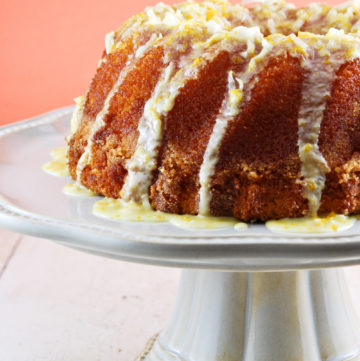
This orange cake is ultra moist, fluffy, and bursting with fresh citrus flavor. Made completely from scratch with real orange juice and orange zest, each layer is soaked with a homemade orange syrup that keeps the cake incredibly tender and packed with bright orange flavor.
Finished with a creamy orange cream cheese frosting, this cake tastes like it came straight from a bakery. The orange syrup is the secret—it soaks into the warm cake layers, adding moisture and intensifying the citrus flavor in every bite.
While this cake takes a little extra effort, the results are absolutely worth it. It’s the perfect centerpiece for birthdays, holidays, spring gatherings, or anytime you’re craving a truly memorable homemade cake.
If you love classic homemade cakes, be sure to try my Strawberry Cake, Hummingbird Cake, and Pig Pickin Cake. You can also browse my full Cake Recipes collection for even more crowd-pleasing favorites.

Why This Orange Cake Works
✔️ Orange zest is rubbed into the sugar to release the natural citrus oils, creating deeper orange flavor throughout the cake.
✔️ Fresh orange juice and orange zest give this cake bright, authentic citrus flavor without relying on artificial extracts.
✔️ The homemade orange syrup soak is brushed onto the warm cake layers, adding moisture and intensifying the orange flavor in every bite.
✔️ Vegetable oil keeps the crumb soft and tender, helping the cake stay moist for days.
✔️ Orange cream cheese frosting balances the sweetness with a rich, tangy finish that complements the bright citrus flavor perfectly.
✔️ Three layers of orange flavor—cake, syrup, and frosting—make this a true orange lover’s cake that’s bursting with fresh citrus taste from top to bottom.
🍊 Why This Orange Cake Is So Moist
This orange cake stays incredibly moist thanks to a combination of oil, fresh orange juice, and a homemade orange syrup soak. Oil creates a softer, more tender crumb than butter-based cakes, while the orange juice adds both moisture and bright citrus flavor.
The real secret, though, is the orange syrup. Brushed onto the warm cake layers, it soaks deep into the crumb instead of sitting on top. The result is a cake that’s exceptionally moist, bursting with fresh orange flavor, and delicious for days after baking.
✨ Before You Begin
✨ Bring the eggs to room temperature before mixing. Room-temperature eggs incorporate more easily into the batter and help create a lighter, fluffier cake.
✨ Zest the oranges before juicing them. It’s much easier to remove the zest from whole oranges than from squeezed ones.
✨ Avoid the white pith when zesting. The bright orange outer layer adds flavor, while the white pith underneath can taste bitter.
✨ Measure your orange zest before starting. This recipe uses a generous amount of zest in the cake, syrup, and frosting, so having everything prepared ahead makes the process much smoother.
✨ Don’t be surprised if the cake layers brown during baking. The outside develops a deep golden color, but the inside remains soft, moist, and full of bright orange flavor.
✨ Have your syrup ingredients ready while the cakes bake. The orange syrup should be brushed onto the cake layers while they’re still warm so it can soak in properly.

Orange Cake Ingredients + Key Notes
Sugar: Granulated sugar sweetens the cake and is rubbed together with the orange zest to help release the natural citrus oils for maximum flavor.
Orange Zest: Fresh orange zest is the star of this recipe. You’ll use it in the cake, syrup, and frosting, creating bright orange flavor in every layer.
All-Purpose Flour: Provides the structure for the cake while keeping the crumb soft and tender.
Baking Powder + Baking Soda: This combination gives the cake a light, fluffy texture and helps it rise evenly.
Salt: A small amount of salt balances the sweetness and enhances the fresh orange flavor.
Vegetable Oil: Oil creates an exceptionally moist cake and helps it stay tender longer than butter-based cakes.
Eggs: Use large, room-temperature eggs for the best texture and even mixing.
Fresh Orange Juice: Freshly squeezed juice delivers the brightest citrus flavor and works together with the zest to give this cake its signature orange taste.
Vanilla Extract: Adds warmth and depth, rounding out the citrus flavors without overpowering them.
Orange Syrup: Made with orange juice, sugar, water, and additional zest, the syrup soaks into the warm cake layers to add moisture and intensify the orange flavor.
Butter, Cream Cheese, and Powdered Sugar: These ingredients create a rich, tangy orange cream cheese frosting that perfectly complements the sweet citrus cake.
Optional Garnish: Fresh orange slices or curled strips of orange peel make a beautiful finishing touch for special occasions.
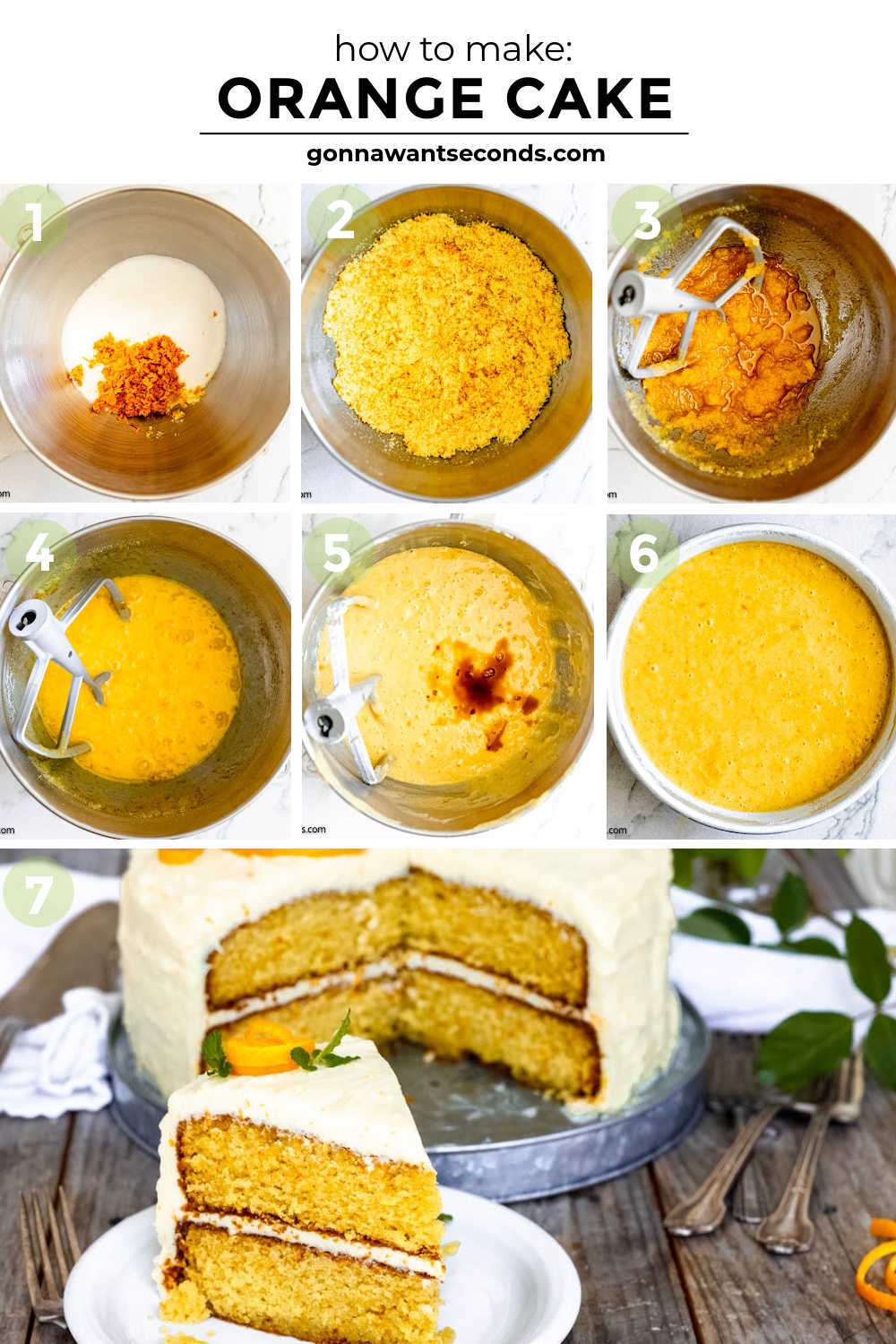
🥣 How To Make Orange Cake
Prepare the pans. Position the oven rack in the center of the oven and preheat to 350°F. Butter and flour two 9-inch cake pans so the layers release easily after baking.
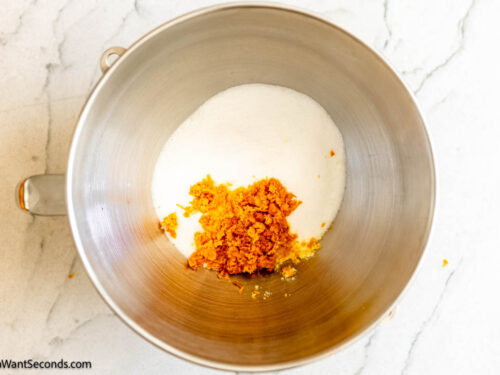
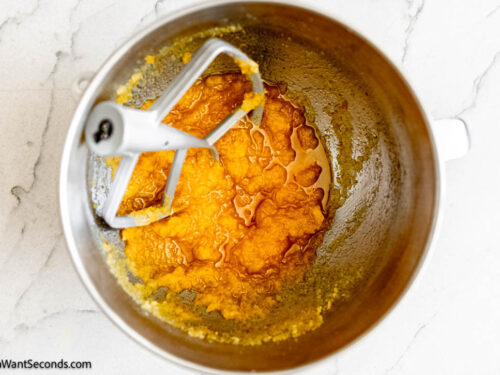
Infuse the sugar with orange flavor. Add the sugar and orange zest to the bowl of a stand mixer and beat for a couple of minutes until the mixture becomes fragrant. This simple step helps release the citrus oils from the zest and distributes orange flavor throughout the cake.
Mix the dry ingredients. In a separate bowl, whisk together the flour, salt, baking powder, and baking soda until evenly combined.
Make the batter. Beat the oil and orange sugar mixture until light and fluffy. Add the eggs one at a time, mixing just until incorporated after each addition. Alternate adding the flour mixture and orange juice, beginning and ending with the flour mixture, then stir in the vanilla extract.
Bake the cake layers. Divide the batter evenly between the prepared pans and bake until the cakes are golden and a toothpick inserted in the center comes out clean. If the tops are browning too quickly, loosely tent the pans with foil during the final part of baking.
Prepare the orange syrup. While the cakes bake, simmer the water, orange juice, sugar, and zest until the sugar dissolves completely.
Soak the warm cakes. Allow the cakes to cool for a few minutes, then poke the tops all over with a toothpick. Brush the orange syrup generously over the warm layers, allowing it to soak into the cake and add incredible moisture and citrus flavor.
Make the frosting. Beat the butter until light and fluffy, then gradually add the powdered sugar. Mix in the cream cheese, orange zest, and vanilla until smooth and creamy.
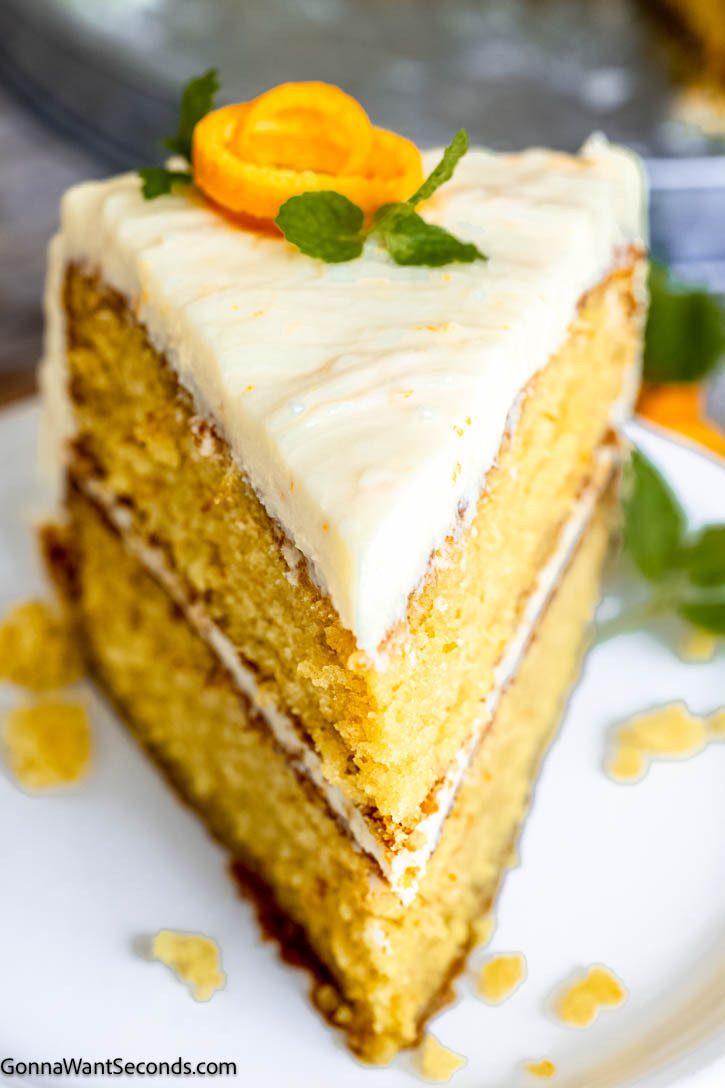
Assemble and frost. Place one cake layer on a serving plate and spread frosting over the top. Add the second layer, then frost the top and sides of the cake. Slice and enjoy!
⭐ Pro Tips
⭐ Use room-temperature eggs. They mix more evenly into the batter, helping create a lighter texture and a more evenly baked cake. Forgot to set them out? Place the eggs in a bowl of warm water for about 15 minutes before baking.
⭐ Zest the oranges before juicing them. It’s much easier to remove the zest from whole oranges, and you’ll get the best flavor by using only the bright orange outer peel and avoiding the bitter white pith.
⭐ Apply the orange syrup while the cake is still warm. The warm cake absorbs the syrup more easily, creating an exceptionally moist crumb and boosting the fresh orange flavor.
⭐ Roll the oranges before juicing. Press and roll them firmly on the countertop or microwave them for 10-15 seconds to help release more juice.
⭐ Freeze extra orange zest for future baking. Spread the zest on a parchment-lined baking sheet, freeze until solid, then transfer it to a freezer bag. It’s a great shortcut for cakes, cookies, and quick breads.
Storing + Freezing + Make-Ahead
How to store orange cake
Because this cake is frosted with cream cheese frosting, it should be stored covered in the refrigerator. A cake carrier or airtight container works best and helps keep the cake from drying out. It will keep well for up to 5 days.
Bring to room temperature before serving
For the best texture and flavor, let the cake sit out for about 30–45 minutes before serving. This gives the frosting time to soften and lets the cake lose that firm, straight-from-the-fridge texture.
How to freeze orange cake
This cake freezes well. For the best texture, freeze the cake layers and frosting separately when possible. Wrap unfrosted cake layers tightly in plastic wrap, then foil, and freeze for up to 2 months. You can also freeze frosted slices by placing them on a baking sheet until firm, then wrapping them well and storing them in an airtight container.
Make-ahead tips
This is a great make-ahead cake because the orange flavor gets even better as it sits. The soak has more time to absorb into the cake, which makes the crumb even more moist and flavorful. You can bake the cake layers a day ahead and frost the cake the next day, or make the fully assembled cake ahead and keep it chilled until ready to serve.
Frequently Asked Questions
◆ How do you keep orange cake moist?
This recipe stays moist thanks to a combination of vegetable oil, fresh orange juice, and a homemade orange syrup soak. Brushing the syrup onto the warm cake layers allows it to absorb deeply into the crumb, adding moisture and boosting the orange flavor.
◆ What is an orange cake soak?
An orange cake soak is a simple syrup made with orange juice, sugar, water, and orange zest. It’s brushed onto the warm cake layers, where it soaks into the cake and creates an incredibly moist texture while intensifying the citrus flavor.
◆ Can I use bottled orange juice instead of fresh?
You can, but fresh orange juice and zest produce the brightest flavor. If using bottled juice, consider adding a little extra zest to help boost the orange flavor.
◆ Why is my orange cake brown on the outside?
This cake naturally develops a deep golden-brown exterior during baking because of the sugar content and fresh orange juice. The inside remains moist, tender, and beautifully orange in color. If the cake is browning too quickly, loosely tent it with foil during the final part of baking.
◆ Why do you add the orange syrup while the cake is warm?
Warm cake absorbs syrup much more effectively than a cooled cake. Applying the syrup while the layers are still warm allows it to soak into the crumb instead of sitting on the surface.
◆ Can I make orange cake ahead of time?
Yes! This cake is an excellent make-ahead dessert. In fact, many people think it tastes even better the next day after the orange syrup has had time to fully absorb into the cake.
Still have questions? Drop them in the comments—I’m always happy to help! 🍊
More Fruity Cake Recipes
Orange Pound Cake – Rich, buttery, and packed with bright orange flavor.
Pineapple Sunshine Cake – Light, fluffy, and bursting with bright pineapple flavor.
Strawberry Sheet Cake – Soft, moist, and bursting with fresh strawberry flavor, this easy sheet cake is topped with a rich strawberry frosting and perfect for feeding a crowd.
Pina Colada Cake – A tropical cake with pineapple, coconut, and sunny flavor.
Carrot Cake – A bakery-style favorite with a super moist crumb and cream cheese frosting.
Tried This Recipe?
💗 If you enjoyed this recipe, please take a moment to leave a ⭐⭐⭐⭐⭐ star rating and a quick comment — I love hearing from you!
Tip for mobile readers: scroll just a bit to tap the stars — thank you!
💌 Hungry for more cozy recipes? Subscribe to my FREE newsletter so you never miss a new family favorite. 💌
Thanks for stopping by my kitchen today — happy cooking, friends! ❤️ Kathleen

Orange Cake
Ingredients
Cake:
- 2 1/4 cups sugar
- 1/3 cup orange zest
- 3 1/3 cups all-purpose flour
- 1 teaspoon salt
- 2 1/4 teaspoons baking powder
- 3/4 teaspoon baking soda
- 1 1/3 cups vegetable oil
- 4 large eggs
- 1 1/3 cups orange juice
- 2 teaspoons vanilla extract
Orange Syrup
- 1/3 cup water
- 1/3 cup orange juice
- 1 cup sugar
- 1 1/2 tablespoons orange zest
Cream Cheese Frosting
- 1 1/3 cups unsalted butter softened
- 6 cups confectioners' sugar
- 16 ounces cream cheese softened
- 2 1/2 tablespoons orange zest
- 2 teaspoons vanilla extract
Instructions
- Arrange the oven shelf to the middle position. Preheat oven to 350ºF (177ºC). Butter and flour 2-9 inch diameter cake pans.
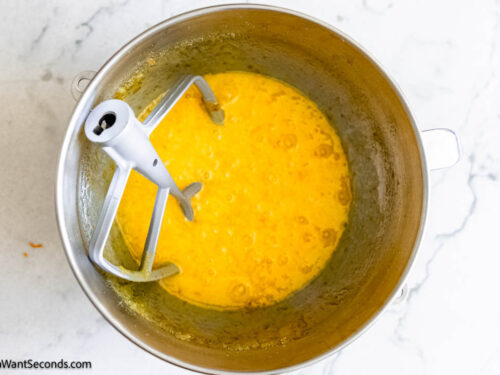
- In the bowl of a stand-up mixer, add sugar (2 1/4 cups) and orange zest (1/4 cup). Set mixer, set on medium, beat until mixture is very fragrant, about 2 minutes; set aside.

- In a medium mixing bowl, whisk together flour (3 1/3 cups), salt (1 teaspoon), baking powder (2 1/4 teaspoons), and baking soda (3/4 teaspoon); set aside.
- In the bowl of a stand mixer, beat the oil (1 1/3 cups) and sugar/zest mixture until light and fluffy, 4-6 minutes.
- Add eggs (4), one at a time, beating just until the yolk disappears and is incorporated into the batter.
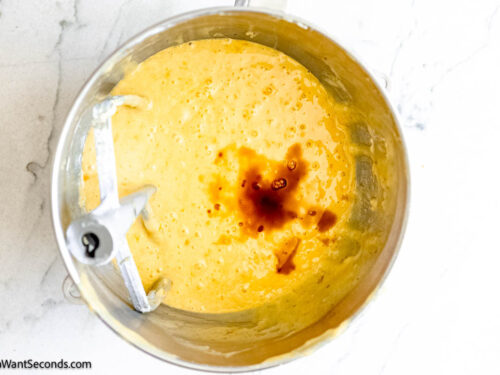
- With the mixer set on low, add orange juice (1 1/3 cups) and flour mixture, alternating, beginning and ending with flour. Stir in vanilla extract (2 teaspoons).
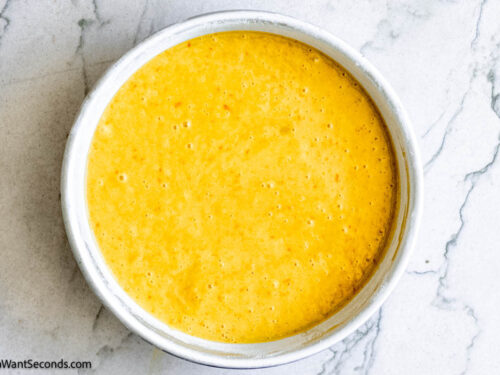
- Pour batter evenly into prepared pans. Place in staggered positions on middle oven shelf and bake 20 minutes, rotate pans, then loosely tent pans. Continue to bake 10-15 minutes more, or until a toothpick inserted in center comes out clean.
Orange Soak:
- While the cakes are baking, prepare orange syrup. Add water (1/3 cup), orange juice (1/3 cup), and sugar (1 cup) to a small saucepan. Bring to a boil, then reduce the heat and simmer until the sugar is dissolved.
- Allow the cake to cool for about 5 to 7 minutes. It will still be warm. Pierce the cake all over the top surface with a toothpick. While the cakes are still warm, using a pastry brush, apply the orange soak over the entire surface of the cake layers. Pour some down the sides of the cake then continue to brush the surface until the soak is gone. Allow your cake to cool completely in pan, then invert onto parchment paper.
Frosting
- In the bowl of a stand mixer fitted with a paddle attachment, cream your butter (1 1/3 cups) for 2 minutes until it's light and fluffy.
- Gradually add the confectioners' sugar (6 cups) while mixing on a low speed. Ensure that each batch of powdered sugar is mixed into the butter well before adding in the next batch.
- Add the cream cheese (16 ounces), orange zest (2 1/2 tablespoons), and vanilla extract (2 teaspoons). Mix just until the frosting is smooth.
Frost The Cake
- Place the first layer of cake on the serving plate. Use an offset spatula to spread frosting on top of the layer.
- Lay the second cake on top of the frosted cake (frosting will be in the center).
- Apply a thicker layer of frosting to the top and sides of the cake. Use the offset spatula to spread the frosting smoothly.
Fans Also Made:
Notes
- Eggs: Be sure to have these at room temperature. It makes a significant difference in how they incorporate into the batter, yielding the optimal result. Here are the specifics:
- When eggs are at room temperature, they incorporate air better, which improves the texture of the cake, making it light and fluffy.
- When room-temperature eggs are used, cakes tend to rise better and more uniformly.
- They will mix into the batter more evenly. When eggs are cold, they tend to cause the cake batter to cool too quickly, which can lead to an uneven texture.
- How to Bring Eggs to Room Temp: It’s easy to forget to set your eggs out on the counter to bring them to room temperature before you begin preparing the cake. If this happens to you, simply place them in a bowl of warm (not hot!) water for approximately 15 minutes before you begin baking.
- When Zesting: It’s much easier to zest the oranges before juicing them! When you zest the oranges, try not to zest too deeply. The orange part of the peel, the white pith, is bitter.
- Freezing Zest: Did you know that you can freeze citrus zest? When using lemons or oranges, zest them first and freeze them. If you prefer, slowly collect orange zest over time. Anytime you eat an orange, zest it first! To freeze zest, place the zest on wax or parchment paper on a cookie sheet. Spread the zest on the paper and then flash freeze it (it will freeze quickly). Once frozen, store it in a freezer bag for later. When you make this cake, you will need ¼ cup plus 3 tablespoons of zest. Once enough is collected, go ahead and make this cake. Baking the cake will go much faster! Don’t forget to juice a few oranges too (1 ¼ cup) and freeze them too!
- Juicing The Oranges: When juicing any type of citrus fruit, to extract more juice, roll the fruit on the counter with your palm, leaning into it, applying pressure. This breaks the cell walls, which releases more juice. You can instead warm the fruit slightly in the microwave for about 10-15 seconds. Warm citrus yields more juice than cold.
- If you have an electric juicer, use it. Doing so yields more juice from the fruit than hand-squeezing does.
- Crust Color: Do not be alarmed if the baked cake is brown on the outside. This batter will brown in the oven. It will be orange on the inside, just as it’s supposed to be.
Nutrition



Could this be made into a 9×13 cake?
Hi Nancy. Yes, this can cake be baked in a 9X13 inch baking dish. You’ll need to increase the bake time.Expected bake time in a 9×13: 40–50 minutes at 350°F. Start checking at 40 minutes
Toothpick should come out clean or with a few moist crumbs, not wet batter.Tent loosely with foil around the 25–35 minute mark to prevent over-browning (this batter browns easily — as your notes already say). When baked in a 9X13 the crumb may be slightly tighter ~ Still tender and moist — just less “layer-cake fluffy”
I got to say, it was a hit in my party! Thank you so much!! They loved it soooo much, I shared the recipe with them!
Hey, Susan! We’re happy it was a hit!! Thanks for the positive feedback and 5-star rating!! 🙂